
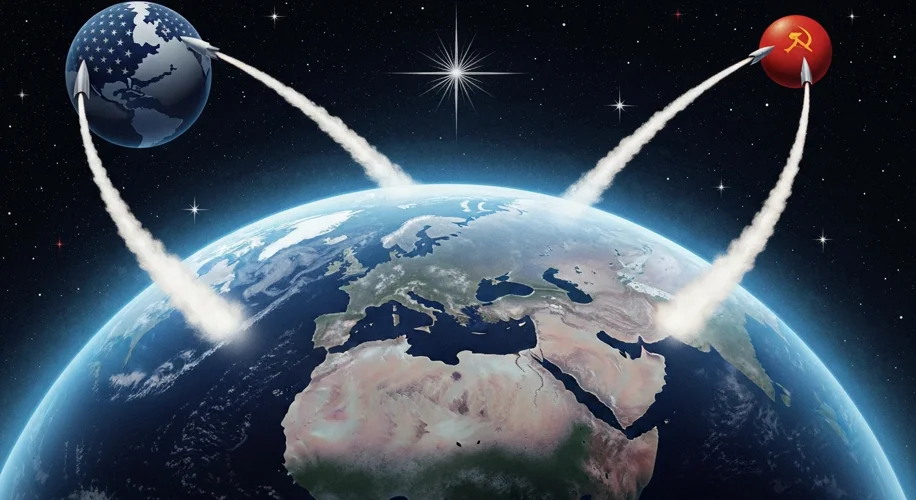
The mid-20th century was a time of simmering tension, a global chess match played out not on a board, but in the vast, silent expanse of space. The Cold War between the United States and the Soviet Union was more than just a geopolitical standoff; it was a battle for hearts, minds, and the very definition of progress. And at its fiery core was the Space Race, a relentless competition to conquer the heavens.
Imagine the scene: a world still reeling from the devastation of World War II, now gripped by a new kind of fear and a burgeoning sense of wonder. The year is 1957. From a remote launchpad in Kazakhstan, a deafening roar splits the quiet steppe. A sleek, silver rocket, a marvel of Soviet engineering, pierces the atmosphere. Aboard, a small, metallic sphere, no bigger than a basketball, carries a momentous payload: Sputnik 1. Its rhythmic beep, transmitted across radio waves, was the first artificial heartbeat from space, a sound that sent shockwaves across the globe, particularly to the United States.
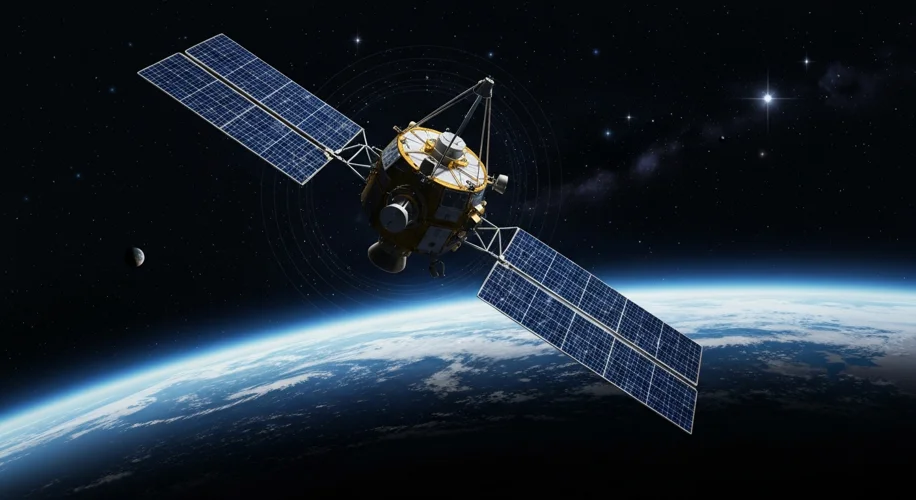
This was not merely a scientific achievement; it was a propaganda coup. The Soviets, often perceived as technologically backward, had just fired a shot heard around the world. The message was clear: they were not just capable, but leading the charge into the future. For the United States, it was a wake-up call, a humbling moment that exposed a perceived lag in critical areas of science and engineering.
The cultural context of this era was ripe for such a competition. Science fiction had long captured the public imagination, with tales of rocket ships and lunar voyages. Now, these fantasies were on the cusp of becoming reality. The Space Race tapped into this collective yearning for the extraordinary, transforming abstract scientific concepts into a visceral, national drama. Education in science and mathematics, the very bedrock of technological advancement, suddenly became a national priority in the US, with the creation of programs like NASA and increased funding for research and development.
The key actors in this cosmic duel were not just scientists and engineers, but also the leaders who championed their efforts. In the Soviet Union, figures like Sergei Korolev, the enigmatic Chief Designer, worked in secrecy, pushing the boundaries of what was thought possible. On the American side, President John F. Kennedy’s bold declaration in 1961 to land a man on the Moon before the end of the decade galvanized a nation and its burgeoning space agency, NASA. His words, “We choose to go to the Moon in this decade and do the other things, not because they are easy, but because they are hard,” became a rallying cry.
The race for supremacy unfolded in a series of breathtaking firsts. The Soviets sent the first animal into orbit (Laika the dog in 1957), the first human into space (Yuri Gagarin in 1961), and the first woman into space (Valentina Tereshkova in 1963). Each of these achievements was met with awe and a corresponding surge of effort from the Americans. The narrative was one of constant escalation, a thrilling and terrifying pursuit where the stakes were not just national pride, but potentially, global security.
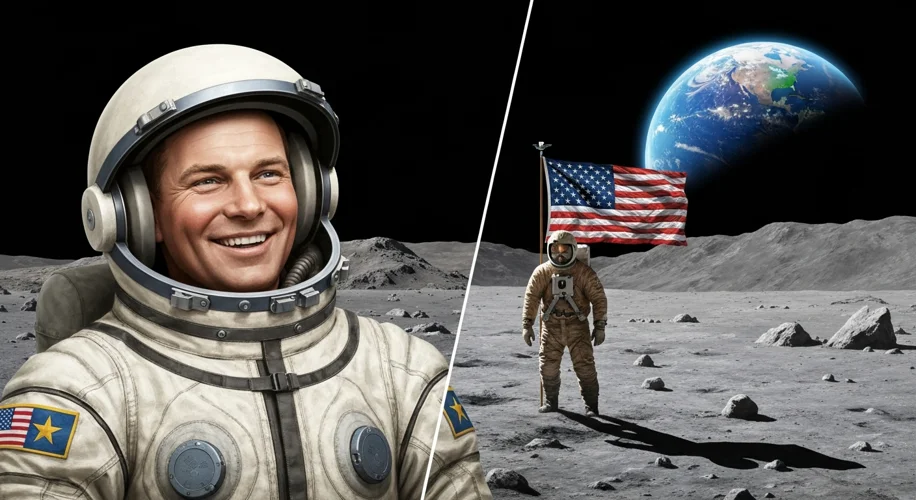
The climax of this intense rivalry, and arguably one of the most iconic moments in human history, was the Apollo 11 mission in July 1969. As Commander Neil Armstrong took his “one small step” onto the lunar surface, a quarter of a billion people watched with bated breath. It was a triumph for the United States, a powerful statement of technological prowess, and a moment that transcended the geopolitical squabbles of the Cold War, uniting humanity, if only for a fleeting instant, in shared wonder.
The consequences of the Space Race extended far beyond the geopolitical landscape. The intense scientific and technological pressure spurred innovations that have become integral to our daily lives. From satellite communication and GPS technology to advancements in materials science and medical imaging, the spin-offs from the space programs are immense. The competition also fostered a spirit of scientific inquiry and inspired generations of scientists, engineers, and dreamers.
However, the Space Race was not without its darker undertones. The immense resources poured into the program could have been directed elsewhere. The tragic loss of life, as seen in the Apollo 1, Soyuz 1, and Soyuz 11 disasters, served as stark reminders of the immense risks involved. Moreover, the underlying military implications of rocket technology, capable of delivering nuclear warheads, meant that the race for space was inextricably linked to the ongoing arms race.
Ultimately, the Space Race was a complex phenomenon, a testament to humanity’s insatiable curiosity and its capacity for both breathtaking achievement and perilous rivalry. It was a cosmic duel that, while born of Cold War tensions, propelled humankind into a new era, forever changing our perspective of our place in the universe and the boundless possibilities that lie just beyond our reach. The echoes of those rockets still resonate today, a reminder of a time when the sky was not the limit, but the beginning.