
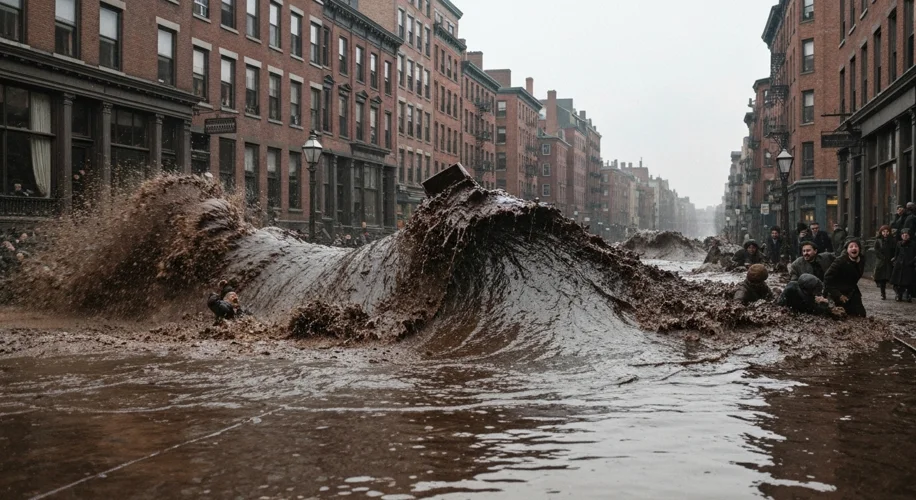
The air in Boston’s North End on January 15, 1919, was crisp, carrying the scent of coal smoke and the salty tang of the nearby harbor. It was a typical winter afternoon, with children playing and workers heading home, unaware that their lives were about to be irrevocably altered by a wave of sweet, sticky death.
At precisely 12:30 PM, a low rumble, like distant thunder, vibrated through the crowded streets. It was followed by a deafening roar. Residents rushed to their windows, only to witness a sight that defied belief: a monstrous wave, dark and viscous, surging through the narrow streets. This was no ordinary flood; it was a tsunami of molasses, twenty-five feet high, moving at an estimated thirty-five miles per hour.
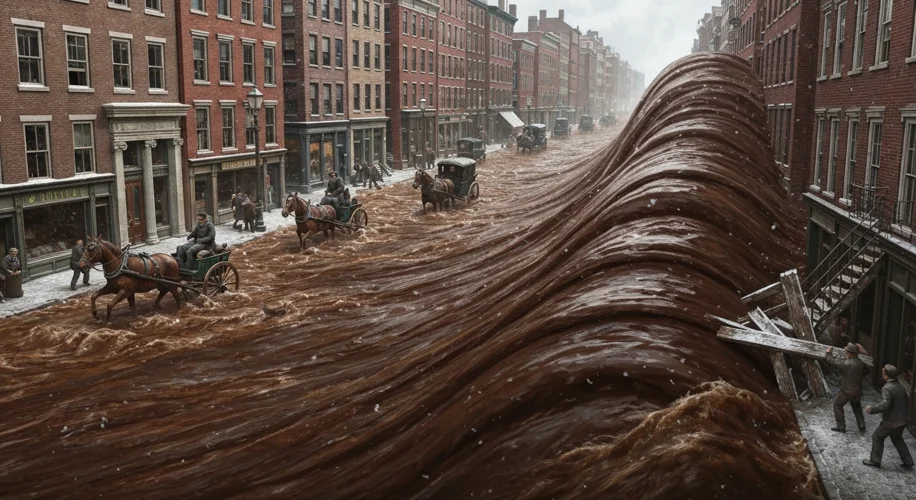
The source of this bizarre and terrifying deluge was a colossal storage tank, owned by the Purity Distilling Company, a subsidiary of United States Industrial Alcohol. This tank, standing 50 feet tall and 40 feet in diameter, held an astounding 2.3 million gallons of molasses, destined to be fermented into industrial alcohol, a crucial component in munitions manufacturing during World War I.
But the tank was a ticking time bomb. For months, locals had complained about its ominous groaning and shuddering. Children claimed to hear a strange humming, and some residents swore they saw the metal seams bulging and leaking. These warnings, however, fell on deaf ears. The company, eager to meet production demands, had apparently rushed its construction and rushed its testing, opting for a quick patch-up job rather than proper repairs.
The structural integrity of the tank had been compromised. The immense pressure of the molasses, coupled with the unseasonably warm temperatures that day (rising from near freezing to over 40 degrees Fahrenheit), proved to be the final straw. The tank catastrophically failed, bursting open with explosive force. The molasses, under immense pressure, erupted outwards, a dark, suffocating tide.
The immediate aftermath was horrific. The wave’s sheer force obliterated everything in its path. Buildings were crushed, railway tracks were warped, and horses and people were swept off their feet, struggling in the thick, clinging liquid. The molasses, heavier and more viscous than water, trapped its victims, suffocating them or causing them to drown. Others were crushed by the debris carried along by the wave.
Rescue efforts were hampered by the nature of the disaster. Firefighters and police officers waded into the waist-deep goo, struggling to pull survivors free. The molasses clung to everything, making movement agonizingly slow. Rescuers reported hearing cries for help and the agonizing groans of the injured, their efforts made all the more difficult by the sticky, dark mass that engulfed the scene.
Over the next few days, a grim task unfolded: recovering the dead. The sticky molasses made identification difficult, and the sheer scale of the tragedy was overwhelming. In the end, 21 people lost their lives, and approximately 150 were injured. The North End was coated in a thick, two-foot layer of molasses, a grim testament to the disaster.
The cleanup operation was monumental. Soldiers and civilians worked for weeks, using saltwater pumped from the harbor and sand to try and wash away the sticky residue. The smell of molasses lingered in the North End for months, a constant, sickening reminder of the tragedy.
This bizarre disaster led to one of the longest and most complex class-action lawsuits in Massachusetts history. Families of the victims sued United States Industrial Alcohol, arguing that the company’s negligence had caused the deaths and injuries. The company, in turn, blamed anarchists, claiming they had bombed the tank. However, the overwhelming evidence pointed to structural failure due to shoddy construction and inadequate maintenance. After years of legal battles, the company was found liable and forced to pay out significant sums to the victims and their families.
The Great Molasses Flood serves as a stark reminder of the catastrophic consequences of corporate negligence and the importance of safety regulations. It was a disaster born not of nature’s fury, but of human oversight, a sticky, suffocating tragedy that, for one brutal hour, transformed Boston’s North End into a scene of unimaginable horror. The echoes of that day, the cries of the victims, and the lingering sweet, yet macabre, scent of molasses, are forever etched into the history of Boston.