
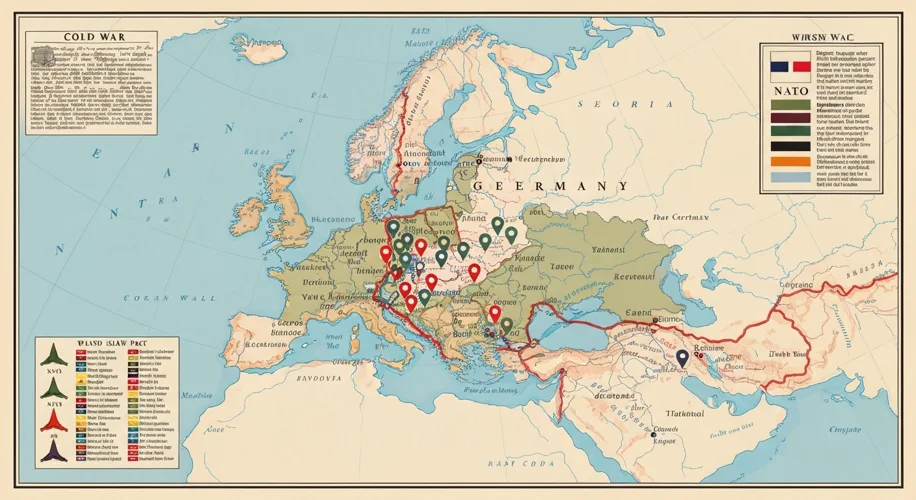
As the final decades of the 20th century dawned, a palpable tension gripped Europe. The Iron Curtain, a stark physical manifestation of ideological division, bisected the continent. For West Germany, nestled precariously on the front lines of this Cold War standoff, the specter of conflict was not a distant theoretical threat but a constant, gnawing reality. In this era of heightened international friction, the nation’s military readiness and defense strategies became paramount, a complex dance of deterrence, alliance, and meticulous planning.
The geopolitical landscape of the late 20th century was a volatile one. The Soviet Union’s formidable military might loomed large, its Warsaw Pact allies forming a contiguous bloc across Eastern Europe. NATO, the North Atlantic Treaty Organization, stood as the bulwark against this perceived threat, with West Germany serving as a critical linchpin in its strategy. The Federal Republic of Germany (FRG), born from the ashes of World War II and divided Germany, was a key player in this alliance. Its defense policy was inextricably linked to the broader NATO strategy of “forward defense,” aiming to repel any Soviet advance as close to the East German border as possible.
The cornerstone of West Germany’s defense was the Bundeswehr, its armed forces. Established in 1955, the Bundeswehr was a deliberate departure from the militaristic past. It was conceived as a “parliamentary army,” subject to civilian control and deeply integrated into the Western alliance. Conscription formed the backbone of its personnel, ensuring a large, albeit often temporarily trained, reserve force. The emphasis was not on offensive capabilities, but on robust defensive measures. This meant investing heavily in sophisticated anti-tank weaponry, air defense systems, and armored units designed for territorial defense.
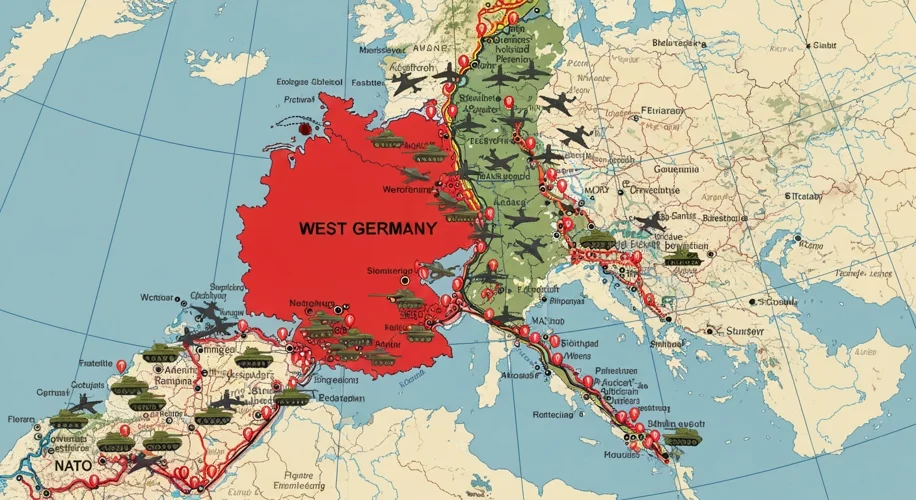
The strategic doctrine emphasized collective security. West Germany understood that it could not defend itself alone. Its existence and security were contingent on the commitment of its NATO allies, particularly the United States, which maintained a significant troop presence on German soil. The concept of “flexible response,” adopted by NATO in 1967, dictated that the alliance would respond to aggression at any level, from conventional warfare to nuclear escalation. For West Germany, this meant preparing for a scenario where conventional forces would engage Soviet bloc armies, with the ultimate threat of nuclear retaliation hanging over the conflict.
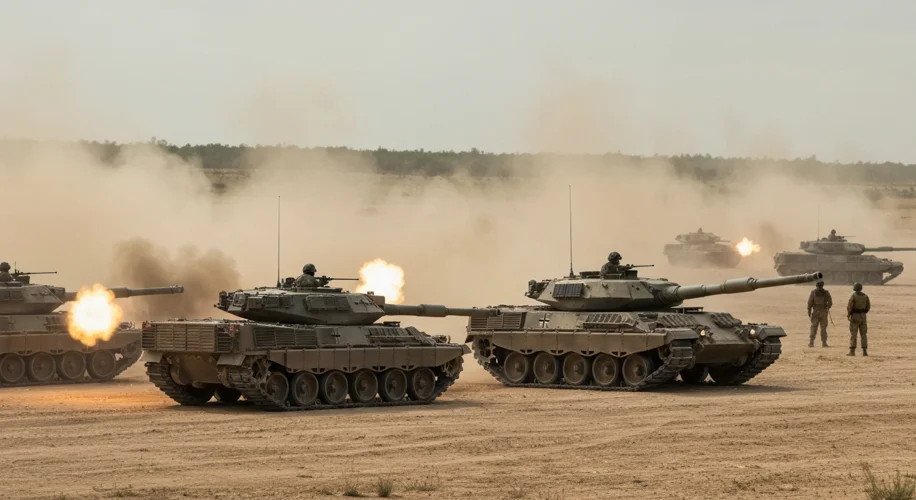
Training and exercises were a critical component of maintaining readiness. The Bundeswehr conducted regular drills, often in conjunction with other NATO forces, simulating large-scale defensive operations. These exercises, frequently held in the vast open spaces of Bavaria or the northern plains, were designed to test troop proficiency, logistical capabilities, and inter-service coordination. Units practiced coordinated assaults against simulated enemy strongholds, defending against air and missile attacks, and conducting complex logistical movements under pressure.
Consider the “REFORGER” (Return of Forces to Germany) exercises. These large-scale, annual maneuvers were a vital demonstration of NATO’s ability to rapidly reinforce Western Europe. They involved flying thousands of U.S. troops and vast quantities of equipment from North America to Germany, testing deployment and integration capabilities under simulated wartime conditions. For the German populace, these exercises were a visible reminder of the ongoing military commitment, with convoys of tanks and armored vehicles frequently traversing the autobahns.
Beyond conventional forces, West Germany also invested in civil defense. Shelters were constructed, warning systems were maintained, and public awareness campaigns aimed to prepare citizens for the unthinkable. While the effectiveness of these measures in the face of nuclear conflict was debatable, they represented a societal commitment to resilience and preparedness.
The consequences of this extensive defense posture were multifaceted. On one hand, it contributed to the decades-long stalemate known as the Cold War, arguably preventing direct large-scale conflict between the superpowers. West Germany’s robust defense, integrated into NATO’s strategy, served as a credible deterrent. On the other hand, the constant state of military readiness and the presence of nuclear weapons created an undercurrent of anxiety and fueled anti-war movements. The proximity of potential conflict meant that West Germans lived with the ever-present possibility of their homeland becoming a battlefield.
The end of the Cold War in 1989 and the subsequent reunification of Germany in 1990 fundamentally altered this defense calculus. The imminent threat from the East evaporated, leading to a significant reduction in military spending and a reorientation of defense policy. However, the legacy of Germany’s late 20th-century defense preparations remains a crucial chapter in understanding the nation’s post-war trajectory and its role in shaping the security landscape of a divided Europe. The meticulous planning, the deep integration into alliances, and the constant vigilance served not only to defend a nation but also to solidify its identity as a democratic, Western-oriented state, forever marked by the shadow of conflict.