
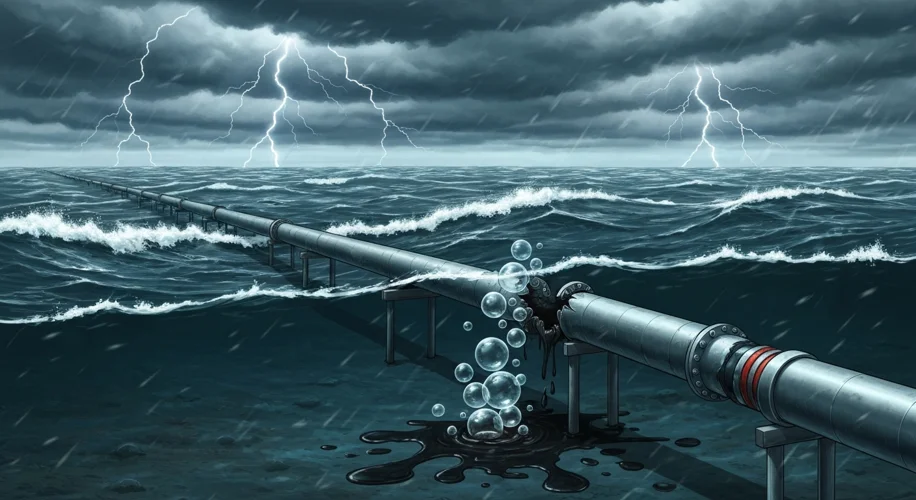
The Baltic Sea, a body of water historically connecting and dividing nations, became the stage for a modern drama of immense geopolitical significance in September 2022. The Nord Stream 1 and 2 pipelines, designed to ferry Russian natural gas directly to Europe, suffered catastrophic damage from what are widely believed to be acts of sabotage. This event, shrouded in mystery and suspicion, is not merely a technical failure but a potent symbol of the intricate and often volatile web of energy politics, international relations, and security concerns that bind Russia and Europe.
The story of Nord Stream is one of ambition, dependency, and ultimately, vulnerability. For years, Russia has been Europe’s primary energy supplier, a relationship that has brought both economic benefit and strategic leverage. The Nord Stream pipelines, particularly the uncommissioned Nord Stream 2, were designed to bypass traditional transit routes through Ukraine and Poland, deepening this dependency and, critics argued, giving Moscow undue influence over European energy security.

Germany, heavily reliant on Russian gas, championed the project, seeing it as a pragmatic solution to its growing energy demands and a bridge to a post-coal, pre-renewable future. Russia, for its part, viewed the pipelines as a vital economic and geopolitical asset, a means to secure long-term revenue and maintain its influence on the continent. However, this narrative was far from universally accepted.
Across the Atlantic, the United States expressed consistent opposition, citing concerns about European energy security and Russia’s potential to weaponize its energy exports. Many Eastern European nations, still wary of Russian intentions due to historical experiences, echoed these concerns, viewing Nord Stream as a direct threat to their own energy independence and strategic positioning. Ukraine, in particular, saw the pipelines as a geopolitical threat, potentially diminishing its importance as a transit country and emboldening Russia.
The alleged sabotage itself is a tale of shadowy operations and unanswered questions. On September 26, 2022, seismic sensors detected underwater explosions near the Danish island of Bornholm, coinciding with sudden and drastic pressure drops in both Nord Stream pipelines. Investigations by Sweden, Denmark, and Germany pointed towards deliberate acts, with evidence suggesting the use of significant amounts of explosives.
The immediate aftermath was a flurry of accusations and counter-accusations. Russia pointed fingers at Western actors, while Western nations and Ukraine hinted at Russian involvement or, alternatively, at a Ukrainian operation designed to prevent Russia from using the pipelines as leverage. The complexity of the operation, requiring sophisticated underwater capabilities, narrowed the field of potential perpetrators, yet no definitive culprit has been officially named, fueling speculation and conspiracy theories.
The consequences of the Nord Stream damage are profound and far-reaching. Economically, it plunged Europe into an energy crisis, forcing nations to scramble for alternative gas supplies, driving up prices, and stoking inflation. This, in turn, contributed to social unrest and political instability in some countries.
Geopolitically, the incident has further fractured the already strained relationship between Russia and the West. It has underscored the fragility of critical infrastructure and raised urgent questions about the security of undersea pipelines, communication cables, and other vital energy arteries around the world. The event has also accelerated Europe’s efforts to diversify its energy sources, accelerating the transition towards renewable energy and away from fossil fuels, particularly those sourced from Russia.
The Nord Stream sabotage is a stark reminder of how energy is inextricably linked to power. It is a testament to the hidden battles fought beneath the waves, battles waged not with torpedoes and battleships, but with explosives and geopolitical calculus. The event has rewritten the narrative of European energy security, exposing vulnerabilities and forcing a reckoning with the complex, often perilous, dance between resource-rich nations and energy-hungry consumers. As the world continues to grapple with the fallout, the scarred pipelines on the Baltic seabed serve as a silent, potent symbol of a new era of energy warfare and geopolitical uncertainty.