
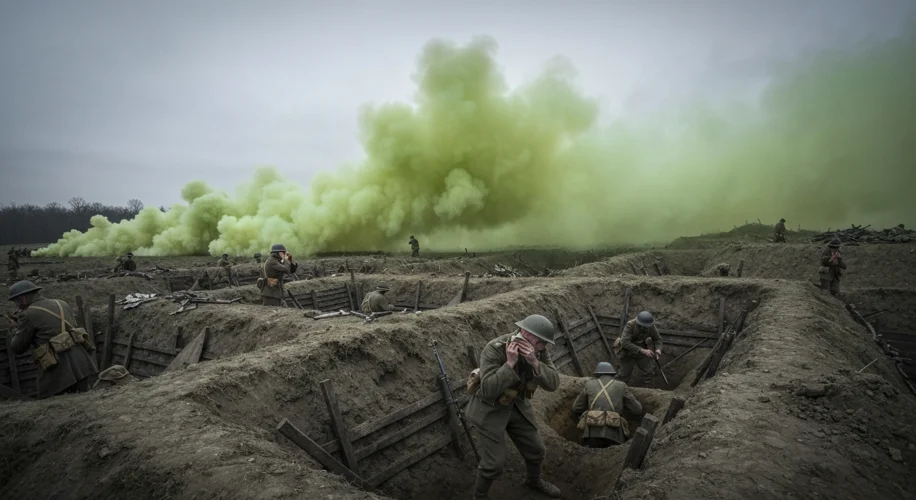
The year is 1915. The Great War, initially envisioned as a swift, decisive conflict, has devolved into a horrific stalemate. The Western Front, a brutal scar across the landscape of Europe, is defined by mud, barbed wire, and the ceaseless thunder of artillery. But a new, insidious terror is about to be unleashed – a terror that blinds, suffocates, and burns. This is the dawn of chemical warfare, a grim chapter in human history that would forever alter the face of conflict.
The culture of warfare in the early 20th century was one of grim duty and martial glory, albeit with a growing understanding of the devastating potential of industrial-age weaponry. Yet, the idea of using poison gas as a deliberate weapon was still a step too far for many, even amidst the slaughter. It was a violation of deeply ingrained, albeit often ignored, notions of chivalry and honorable combat.
The historical context was ripe for escalation. The rapid advancements in chemical industries during the late 19th and early 20th centuries meant that potent toxins, previously confined to laboratories and industrial processes, were now readily available. Germany, a powerhouse in chemical manufacturing, was the first to weaponize these discoveries on a massive scale.
The key actors in this unfolding tragedy were the military strategists and scientists who devised and deployed these weapons, and the unfortunate soldiers who became their first victims. On one side, men like Fritz Haber, a Nobel laureate and fervent German chemist, saw poison gas as a potential breakthrough that could shatter the trench deadlock. On the other, Allied soldiers, caught unprepared, faced an enemy they could neither see nor easily defend against.
The infamous Ypres Salient in Belgium became the grim stage for the first large-scale deployment of poison gas on April 22, 1915. At 5 p.m., a thick, yellow-green cloud, a terrifying mixture of chlorine gas, was released from cylinders dug into the German lines. The wind, a fickle ally, carried the lethal vapor towards the unsuspecting French colonial troops and Territorial Army units. The scene that followed was pure horror. Men choked, their eyes burned, their lungs seared. Some desperately tried to flee, only to be caught by the advancing German infantry, who themselves were equipped with rudimentary gas masks, a stark contrast to the almost entirely unprotected Allied forces.
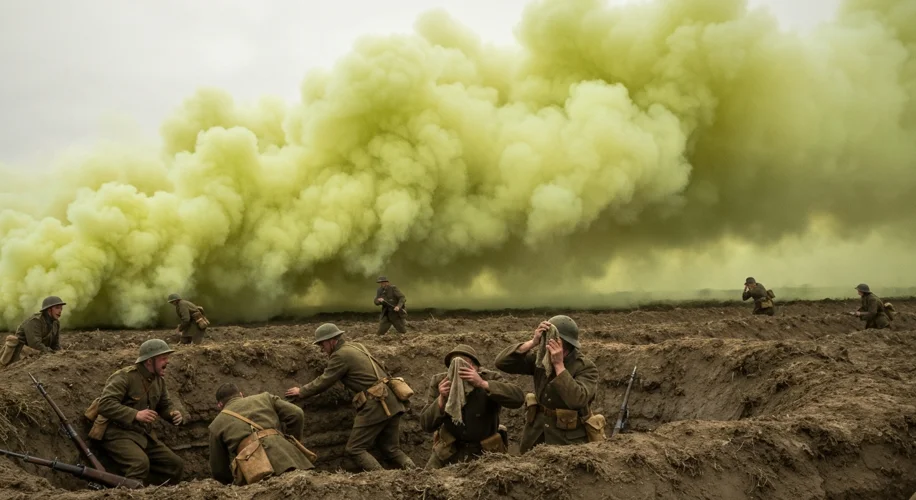
This initial attack, while tactically successful in creating a significant breach in the Allied lines, was not fully exploited by the Germans. However, the die was cast. The genie of chemical warfare was out of the bottle. Other nations, including France and Britain, quickly followed suit, developing their own gases, such as phosgene and, most infamously, mustard gas.
Mustard gas, first used by the Germans in 1917, was a particularly cruel innovation. Unlike chlorine, which caused immediate choking and burning, mustard gas was a blistering agent. It didn’t kill instantly but inflicted agonizing burns on the skin, eyes, and respiratory system. The effects could be delayed, meaning soldiers exposed might not realize the severity of their injury until it was too late. The gas would linger on clothing and in trenches, making areas hazardous for days, if not weeks.
The consequences of chemical warfare were devastating. While accounting for a smaller percentage of total casualties compared to artillery, the psychological impact was immense. The fear of the unseen enemy, the agonizing pain, and the long-term health effects – blindness, respiratory illnesses, and psychological trauma – left indelible scars on the survivors. The development of gas masks and protective clothing became a desperate race against the evolving chemical arsenal.
The broader impact extended beyond the battlefield. The development and use of these weapons raised profound ethical questions about the nature of warfare and humanity’s capacity for destruction. It blurred the lines between combatants and civilians, as the wind could carry these agents far from the front lines. The lingering fear and revulsion associated with chemical weapons would shape international relations for decades, leading to treaties and conventions aimed at banning their use.
It’s a chilling historical echo that resonates even today. Recent reports suggesting the use of similar toxic compounds against civilian protesters in places like Georgia, as hinted by BBC evidence, underscore the enduring and horrifying legacy of chemical warfare. While the context and scale may differ, the underlying principle of using toxic agents to inflict suffering and control populations remains a terrifying specter from the Great War that refuses to be fully banished. The choking haze of the trenches, born from the misguided ingenuity of war, serves as a stark reminder of humanity’s capacity for both innovation and unimaginable cruelty.
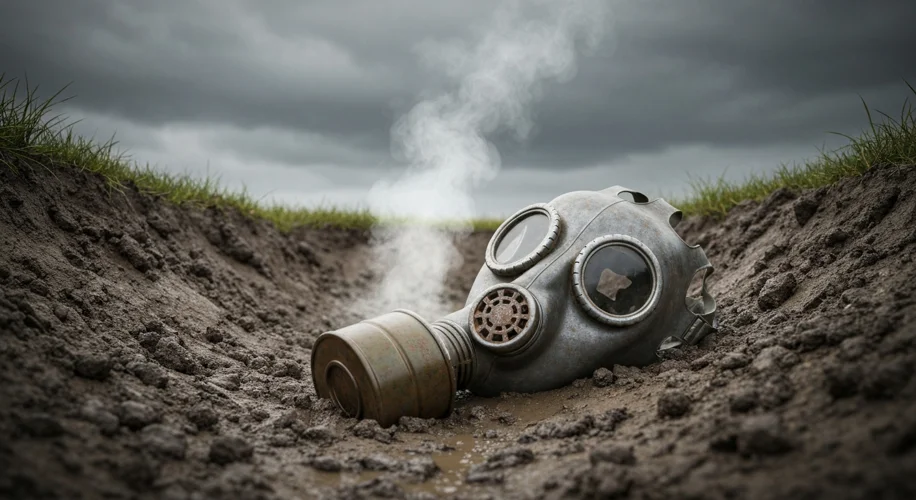
This era of chemical warfare was not just about the introduction of new tools of destruction; it was a fundamental shift in the very nature of conflict, transforming the battlefield into a laboratory of pain and fear, a legacy that continues to haunt us.