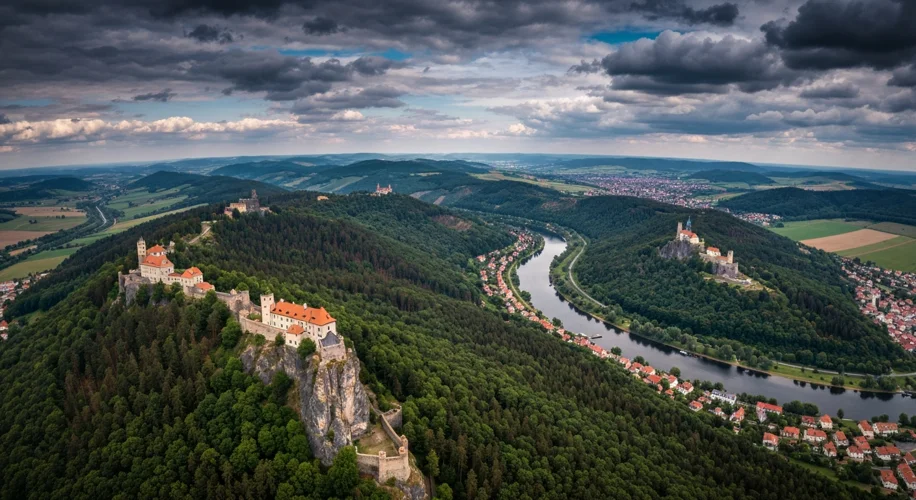
The mist-shrouded peaks and rolling emerald hills of the Czech Republic hold within them the echoes of a history as rich and complex as any tapestry woven through the ages. This is a land that has seen empires rise and crumble, faiths clash, and a tenacious spirit of independence forge itself against overwhelming odds. Join us as we journey back through the mists of time, to uncover the captivating saga of the Czech Lands.
Our story begins not with kings and castles, but with the whisper of Slavic tongues on the winds of the 5th century. These early settlers, the ancestors of the modern Czech people, found fertile ground in the heart of Europe. Their scattered tribes would soon coalesce, driven by the need for protection and the burgeoning influence of distant empires.
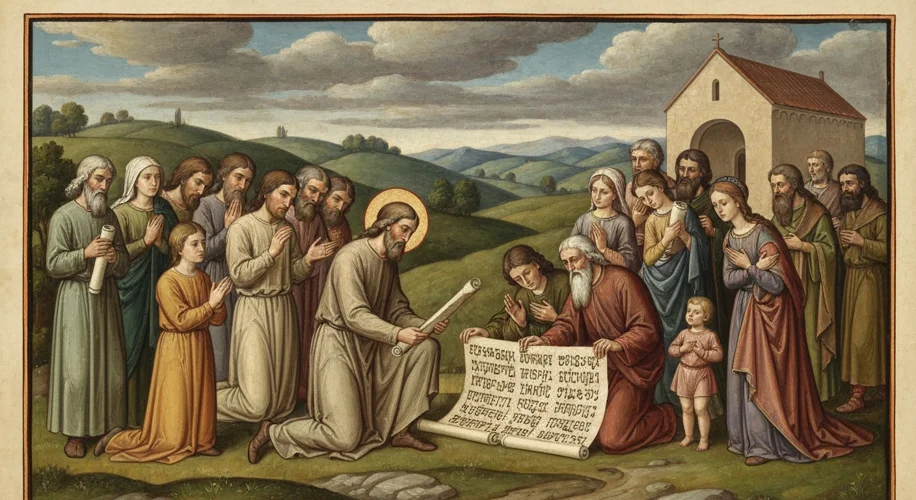
The 9th century witnessed a pivotal moment: the rise of the Great Moravian Empire. This powerful Slavic state, centered in the lands of modern-day Moravia and Bohemia, became a bulwark against the expansion of Germanic tribes and the Frankish Empire. It was here that Christianity truly took root, brought by the Byzantine missionaries Saints Cyril and Methodius. They didn’t just bring faith; they brought literacy, crafting the Glagolitic alphabet and translating religious texts into the vernacular, laying the very foundation of Slavic written culture.
But empires, however grand, are often ephemeral. The Great Moravian Empire eventually succumbed to internal strife and the relentless pressure of Magyar invasions from the east. Yet, its legacy endured, particularly in the western reaches of its former dominion: Bohemia.
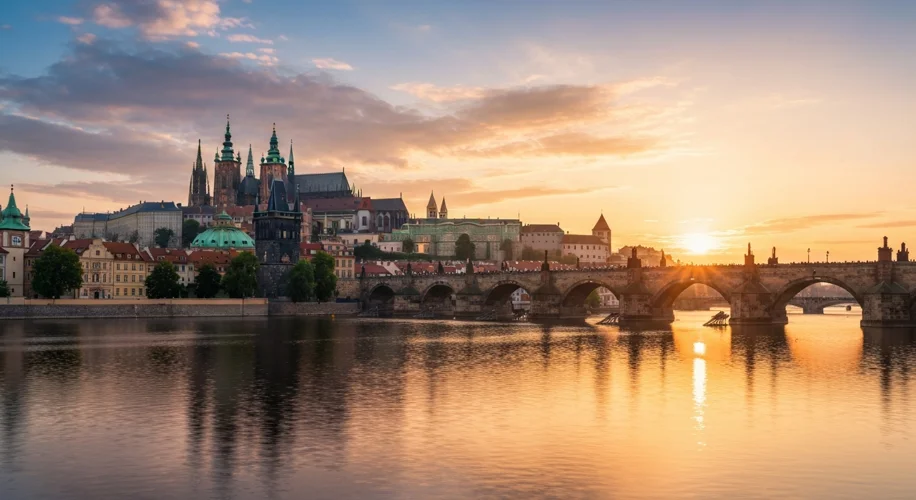
By the 10th century, Bohemia began to assert its own distinct identity, blossoming into the Kingdom of Bohemia. Under the Přemyslid dynasty, it grew in power and prestige. Prague, its capital, began its ascent to prominence, a jewel destined to become a center of European culture and politics. The reign of Charles IV in the 14th century marked a golden age. He was Holy Roman Emperor, King of Bohemia, and a patron of the arts and sciences. He founded Charles University, the oldest university in Central Europe, and commissioned the iconic Charles Bridge, a testament to the kingdom’s burgeoning glory.
However, this golden era was shadowed by religious upheaval. The teachings of Jan Hus, a fiery preacher and reformer who predated Martin Luther by a century, ignited a passionate movement for religious reform. Hus’s condemnation and execution in 1415 by the Council of Constance sent shockwaves through Bohemia, igniting the Hussite Wars. This was not merely a religious conflict; it was a national uprising against perceived foreign domination and church corruption. The Hussites, often outnumbered, fiercely defended their lands and their faith, employing innovative tactics and forging a powerful sense of Czech identity.
The winds of change blew harshly through the Bohemian lands. After a period of relative autonomy, Bohemia fell under the sway of the Habsburg Monarchy in the 16th century. This marked the beginning of centuries of foreign rule, a period characterized by both cultural flourishing and bitter struggle. The Thirty Years’ War (1618-1648), triggered by the Defenestration of Prague, devastated the land, shattering its political and economic power and ushering in an era of intense Catholic Counter-Reformation and Germanization.
Yet, the Czech spirit refused to be extinguished. The 19th century saw a powerful national revival. Scholars, writers, and poets delved into Czech history, language, and folklore, rekindling a sense of shared identity. Figures like František Palacký, the ‘Father of the Nation’, tirelessly advocated for Czech autonomy within the vast Austro-Hungarian Empire. The burgeoning industrial revolution also provided a new class of Czech workers and intellectuals who increasingly demanded a voice in their own destiny.
The crushing defeat of the Central Powers in World War I created a seismic shift. The Austro-Hungarian Empire dissolved, and on October 28, 1918, the First Czechoslovak Republic was proclaimed, a beacon of democracy in interwar Europe, uniting Czechs and Slovaks. For a brief, glorious period, the dream of independence was realized.
But the shadows of aggression soon loomed. The Munich Agreement of 1938, a betrayal by Western powers, allowed Nazi Germany to annex the Sudetenland, effectively dismembering Czechoslovakia. The subsequent occupation and establishment of the Protectorate of Bohemia and Moravia under Nazi rule was a brutal chapter, marked by oppression, persecution, and the chilling systematic extermination of the Jewish population.
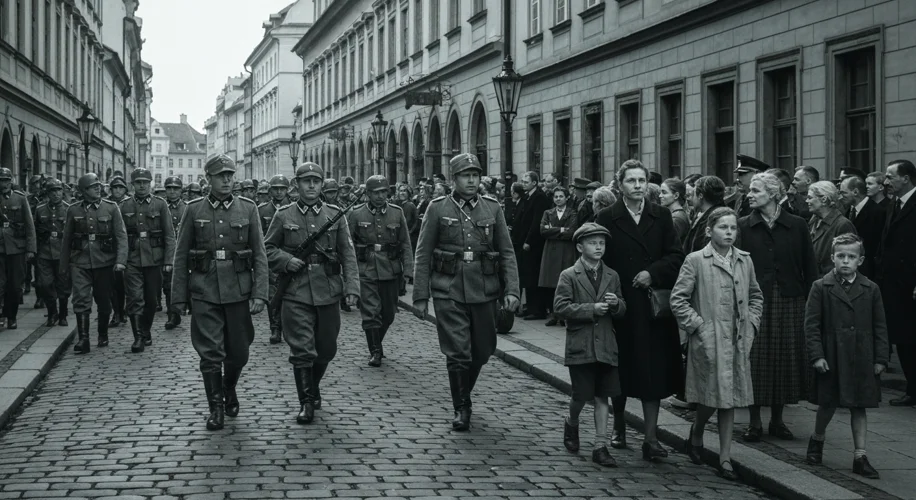
Following World War II, the Czech lands, liberated but weary, fell once again under the shadow of foreign power, this time the Soviet Union. The Communist coup of 1948 crushed democratic aspirations, ushering in decades of totalitarian rule. The Prague Spring of 1968, a brave attempt at liberalization, was brutally crushed by Soviet tanks, a stark reminder of the Iron Curtain’s unyielding grip.
The Velvet Revolution of 1989, a peaceful and profound uprising, finally shattered the chains of communism. This led to the dissolution of Czechoslovakia in 1993, creating two independent nations: the Czech Republic and Slovakia.
Today, the Czech Republic stands as a sovereign nation, a member of the European Union and NATO, looking towards the future with pride and resilience. Its history is not just a chronicle of battles and kings; it is a testament to the enduring spirit of a people who, through centuries of strife and subjugation, never lost sight of their identity, their culture, and their unyielding desire for freedom. The echoes of Bohemia, Moravia, and Silesia continue to resonate, a powerful reminder of the vibrant, indomitable heart of Central Europe.