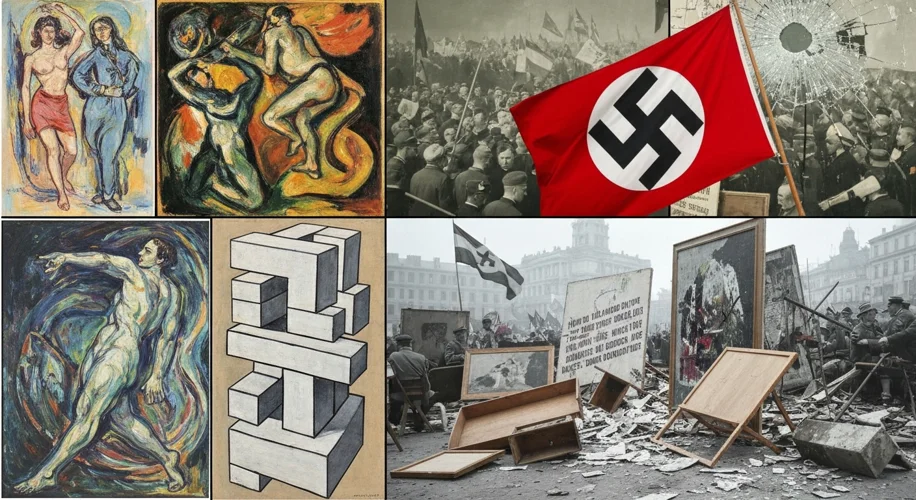
The year is 1937. Berlin, once a pulsating heart of artistic innovation, now finds itself under a suffocating shroud. The air, thick with ideological fervor, carries a chilling directive: the avant-garde, the bold, the experimental – these are not just artistic styles, but enemies of the state. Prior to and during the rise of Nazism, Germany was a crucible of artistic revolution, birthing movements that dared to shatter conventions and redefine the very essence of art. Yet, these very innovations made them prime targets for an insatiable hunger for ideological purity.
Imagine the studios of Dresden in the early 1900s. Here, a group of artists, calling themselves ‘Die Brücke’ (The Bridge), were ready to leap across the chasm separating them from the staid academic traditions. Led by figures like Ernst Ludwig Kirchner and Erich Heckel, Die Brücke sought to forge a new path, one characterized by raw emotion, vibrant, clashing colors, and a visceral, almost brutal, depiction of urban life and the human form. Their woodcuts, jagged and powerful, seemed to claw at the canvas, expressing the anxieties and exhilarations of a rapidly changing Germany.
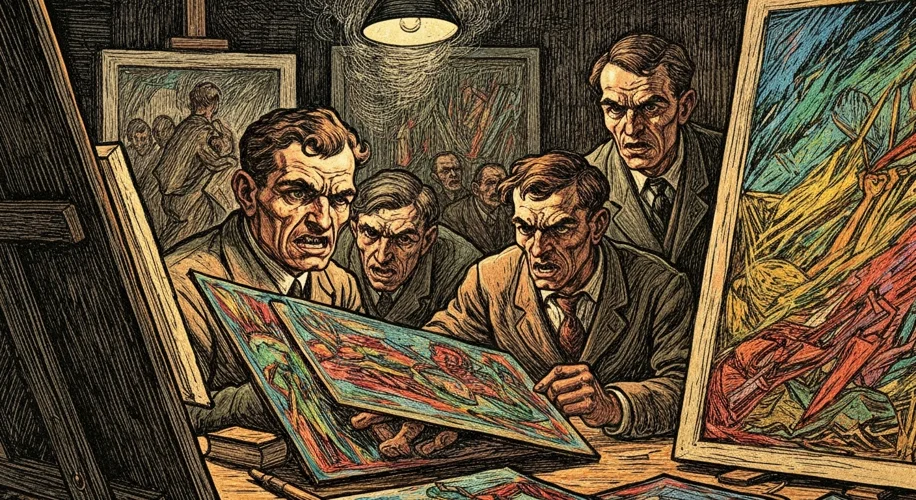
Simultaneously, in Munich, another constellation of artists, ‘Der Blaue Reiter’ (The Blue Rider), were exploring the spiritual and emotional dimensions of color and form. Led by Wassily Kandinsky and Franz Marc, this group delved into abstraction, believing that pure color and line could evoke a deeper, more universal truth than any representational image. Kandinsky, in particular, aimed to create an art that was akin to music, a visual symphony that resonated directly with the soul. His canvases, alive with swirling forms and luminous hues, were a stark departure from anything that had come before.
But Germany’s artistic awakening was not confined to painting and printmaking. In Weimar, a revolutionary school of design, art, and architecture was born: the Bauhaus. Founded by Walter Gropius in 1919, the Bauhaus sought to unify art, craft, and technology, aiming to create functional, beautiful, and accessible designs for a modern world. Its influence was profound, impacting everything from furniture and typography to urban planning. Think of Marcel Breuer’s iconic Wassily Chair, a testament to Bauhaus principles of form following function, or the clean, geometric aesthetic that permeated its architecture.
These movements, brimming with a spirit of freedom and innovation, were a direct affront to the burgeoning Nazi ideology. The Nazis, obsessed with order, tradition, and a narrow, nationalistic vision, viewed abstract art as ‘degenerate’ – a corrupting force, a sign of racial impurity, and a symbol of internationalism they so vehemently despised. The vibrant colors of Expressionism were seen as chaotic, the abstractions of Der Blaue Reiter as nonsensical, and the functionalism of the Bauhaus as soulless and internationalist.
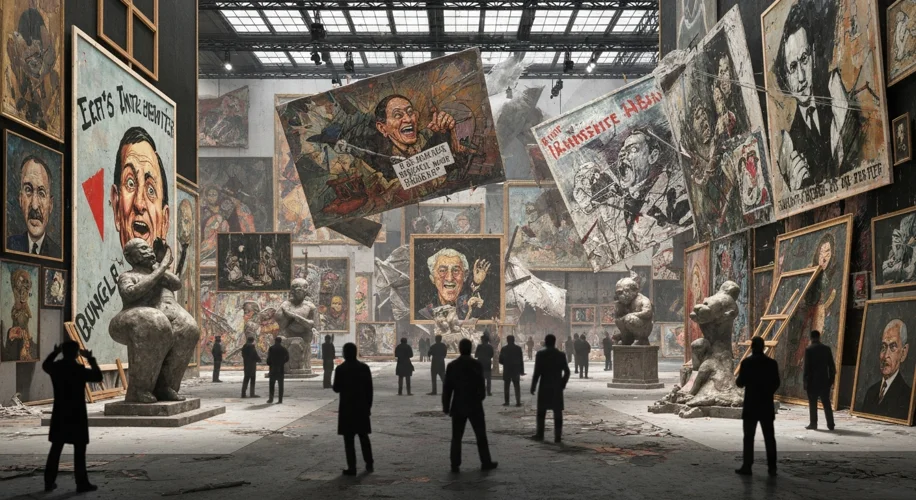
The systematic suppression began in earnest. In 1937, the infamous ‘Degenerate Art’ exhibition (Entartete Kunst) was organized in Munich. This was no mere artistic critique; it was a public humiliation. Masterpieces by artists like Kirchner, Kandinsky, Paul Klee, and Otto Dix were displayed in a chaotic, disarrayed manner, alongside antisemitic caricatures and crude labels. The intention was clear: to mock, to ridicule, and to incite hatred against these artists and their creations. Thousands of works were confiscated from German museums, many were destroyed, sold off to private collectors abroad, or simply vanished into the abyss.
Bauhaus, too, faced relentless pressure. Gropius resigned in 1928, and the school was eventually forced to close in 1933, its faculty and students scattered across the globe, carrying the Bauhaus ideals with them to new homes in places like the United States and Israel. The Nazis saw its emphasis on function and its international faculty as a threat to their nationalist agenda.
The consequences of this ideological purge were devastating, not just for the artists themselves, but for the cultural landscape of Germany and the world. Many artists, persecuted and ostracized, were forced into exile, their voices silenced within their homeland. Some, tragically, perished in the Holocaust. The vibrant, progressive artistic spirit that had defined Germany in the early 20th century was brutally suppressed, replaced by a sterile, nationalistic art that glorified the regime.
Yet, the story of the avant-garde under Nazism is not just one of suppression; it is also a testament to the enduring power of artistic expression. The seeds of innovation planted by Die Brücke, Der Blaue Reiter, and the Bauhaus, though brutally pruned, were not destroyed. They were carried abroad, nurtured in new environments, and ultimately continued to influence art, design, and architecture worldwide. The very act of labeling these movements ‘degenerate’ inadvertently highlighted their radical departure from the norm and their profound impact on the trajectory of modern art. The shadow of the swastika could not extinguish the light of creativity; it merely cast it into a different, perhaps even more illuminating, space.