
Japan, an island nation often perceived as culturally homogeneous, has a long and complex history with foreign immigration and residency. While its doors have not always been wide open, the ebb and flow of its policies paint a fascinating picture of national identity, economic necessity, and evolving global engagement.
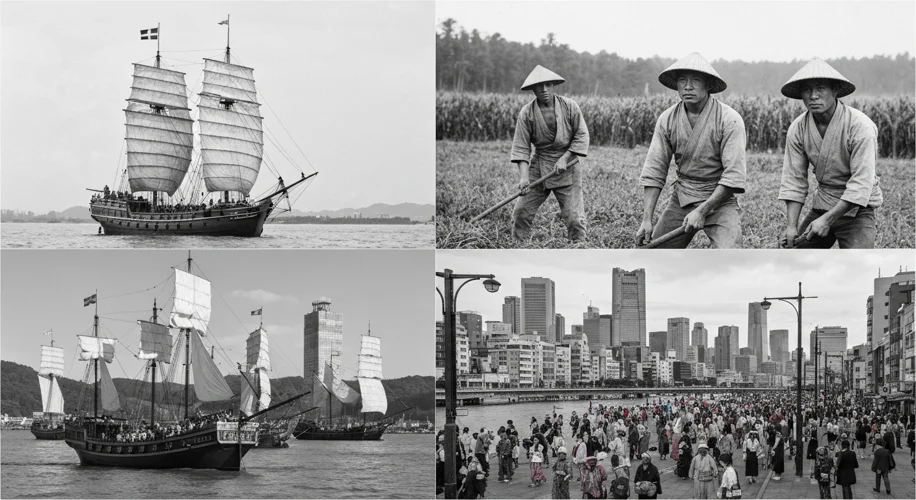
For centuries, Japan largely pursued a policy of isolation, a period known as sakoku (鎖国), which lasted from the early 17th century until the mid-19th century. During this time, foreign contact was severely restricted, and the influx of outsiders was minimal. The primary exceptions were limited trade with the Dutch and Chinese at Nagasaki, and the presence of Korean diplomats and Ryukyuan envoys. This era fostered a strong sense of Japanese distinctiveness, but also limited exposure to foreign ideas and peoples.

The forced opening of Japan by Commodore Matthew Perry in 1853 marked a seismic shift. The Meiji Restoration that followed (1868-1912) ushered in an era of rapid modernization and Westernization. As Japan sought to catch up with the industrial powers of the West, it began to look outward. However, this period was not characterized by mass immigration into Japan. Instead, it was a time of significant Japanese emigration. Millions of Japanese, seeking economic opportunities, moved to places like Hawaii, the United States, Canada, Brazil, and Peru, forming the backbone of early Japanese diaspora communities.
The late 19th and early 20th centuries saw a growing awareness in Japan of its place on the global stage. The Russo-Japanese War (1904-1905) was a pivotal moment, demonstrating Japan’s military prowess and challenging Western notions of racial superiority. Yet, even as Japan expanded its influence in Asia, its domestic policies regarding foreign residency remained cautious. The Immigration Act of 1924 in the United States, which severely restricted Japanese immigration, was a painful reminder of the discriminatory attitudes faced by Asian immigrants.
Following World War II, Japan’s relationship with immigration underwent further evolution. The post-war economic miracle transformed Japan into a global economic powerhouse, creating a demand for labor that its aging and shrinking population could not meet. This led to a gradual but significant shift in policy. Initially, temporary foreign workers were brought in, often in sectors facing labor shortages like construction and manufacturing.
The concept of permanent residency, a status that grants individuals the right to live in Japan indefinitely without the need for annual visa renewals, became a crucial element in this evolving landscape. While not equivalent to citizenship, permanent residency offers a significant degree of stability and integration. Early forms of long-term residency were often tied to specific conditions, such as being of Japanese ancestry (like the zainichi Koreans, descendants of those who came to Japan during the colonial era and whose status remains a complex issue) or married to a Japanese national.
In 1990, Japan introduced a more formalized system for permanent residency. This was largely driven by the need to address labor shortages and to better integrate long-term foreign residents. The criteria typically included a minimum period of continuous residency (often 10 years), good conduct, sufficient financial means, and in some cases, a demonstrated contribution to Japanese society. This policy acknowledged the growing reality of a foreign-born population contributing to Japan’s economy and social fabric.
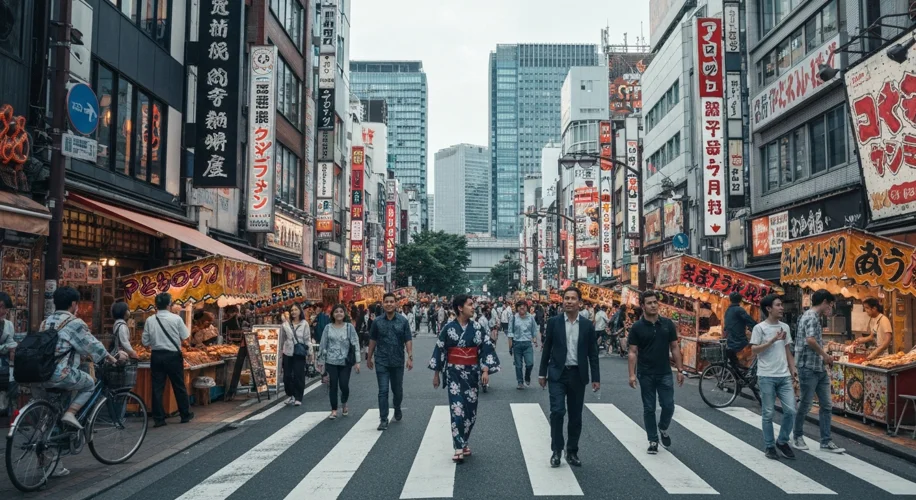
Despite these policy shifts, Japan continues to grapple with a perception of being a relatively closed society. The number of foreign residents, though increasing, remains a small percentage of the total population. Challenges persist, including language barriers, cultural integration, and the complex legal and social status of certain groups, particularly those from neighboring Asian countries.
The discussion around immigration and permanent residency in Japan is not merely an administrative one; it touches upon fundamental questions of national identity, culture, and the future direction of a nation facing demographic headwinds. As the world becomes increasingly interconnected, Japan’s approach to welcoming and integrating foreign residents will continue to be a critical indicator of its engagement with the global community and its vision for a sustainable future.
The story of Japanese immigration and residency is not one of a simple, unchanging policy, but rather a dynamic narrative reflecting the nation’s historical journey, its economic imperatives, and its ongoing dialogue with the world. It’s a story still being written, one residency permit, one family, and one cultural exchange at a time.