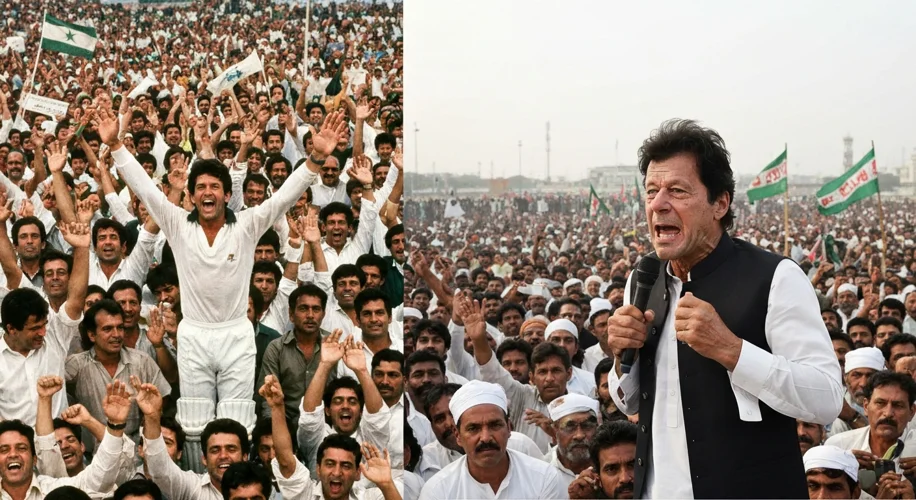
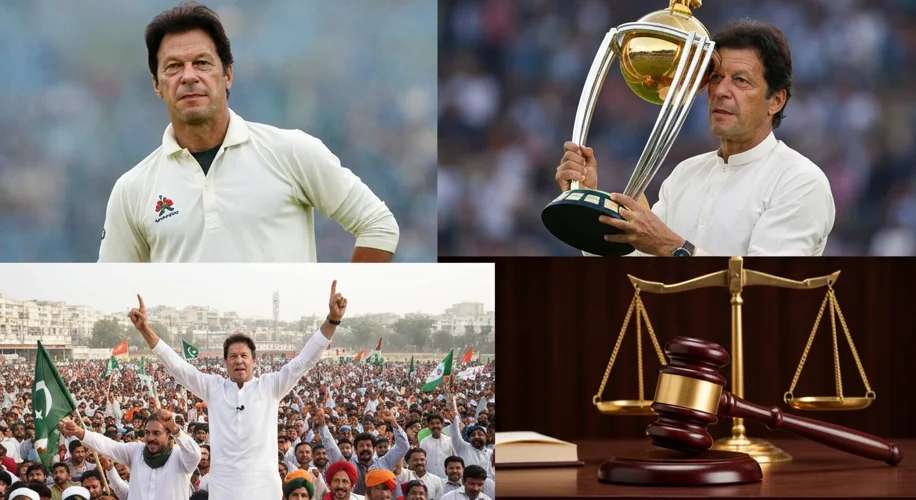
The roar of the cricket crowd was once the soundtrack to his life. Now, the clamor of political rallies and the hushed tones of courtrooms echo louder. Imran Khan, a name synonymous with Pakistan’s greatest sporting triumph, embarked on a second, far more tumultuous journey – the quest for political power, culminating in a premiership that defined a nation’s hopes and frustrations, before ensnaring him in a web of legal battles.
Born in Lahore in 1952, Imran Khan Niazi emerged from the privileged elite of Pakistan. His early life was marked by a stellar education at elite institutions like Aitchison College and the University of Oxford, laying the groundwork for a life that would traverse continents and cultures. But it was on the cricket pitch that he first captured the global imagination. His charisma, talent, and fierce determination led Pakistan to an improbable victory in the 1992 Cricket World Cup, cementing his status as a national hero.
Yet, the adoration of millions was not enough. The cricketing legend harbored a deeper ambition: to transform Pakistan. In 1996, he launched the Pakistan Tehreek-e-Insaf (PTI), or Pakistan Movement for Justice. His initial foray into politics was met with skepticism, his party struggling to gain traction against the established political dynasties that had long dominated Pakistan’s landscape. For years, PTI remained a fringe movement, its rallies drawing passionate but relatively small crowds, its message of anti-corruption and Islamic welfare resonating with a segment of the populace yearning for change.
Khan’s narrative was one of perpetual underdog struggle. He positioned himself and his party as outsiders, a bulwark against the pervasive corruption that he argued had crippled Pakistan’s potential. His speeches, often delivered with fiery conviction, painted a picture of a nation rich in resources but plagued by a corrupt elite – the “thieves” who plundered its wealth. This message found fertile ground among Pakistan’s youth and a growing middle class, increasingly disillusioned with the status quo.
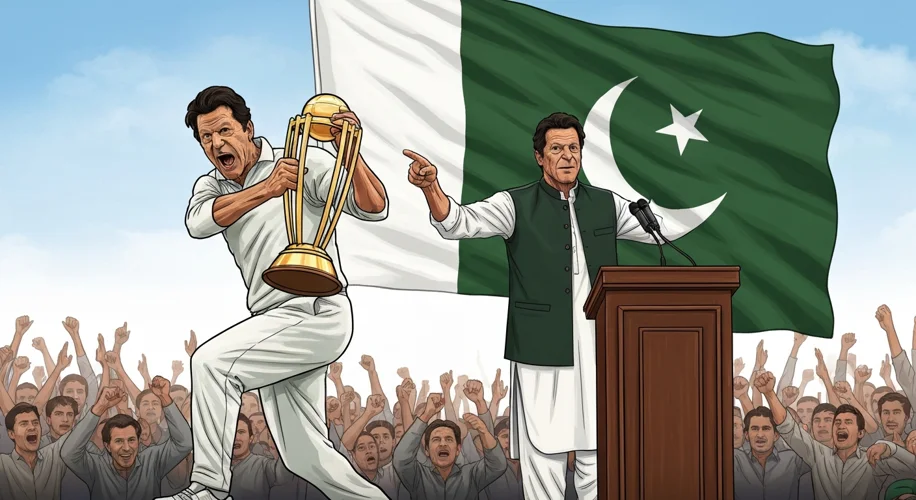
The turning point arrived after years of persistent campaigning and strategic alliances. In the 2018 general election, fueled by widespread discontent with the incumbent government and a potent anti-corruption message, PTI emerged as the largest party. On August 18, 2018, Imran Khan was sworn in as the 22nd Prime Minister of Pakistan. His ascent was hailed by supporters as a seismic shift, the dawn of a new era for a nation long grappling with economic instability, political corruption, and internal security challenges.
As Prime Minister, Khan’s agenda was ambitious. He pledged to create a “Naya Pakistan” (New Pakistan) – a welfare state inspired by the Islamic prophet Muhammad’s Medina, emphasizing social justice, poverty alleviation, and robust anti-corruption measures. His government initiated austerity measures, sought foreign investment, and launched ambitious social programs like the Sehat Insaf Card for health insurance and the Ehsaas program for poverty reduction. His foreign policy aimed to recalibrate Pakistan’s relationships, seeking neutrality in regional conflicts and strengthening ties with China while navigating the complex relationship with the United States.
However, the path of governance proved far more arduous than the campaign trail. Khan’s premiership was marked by persistent economic challenges, including high inflation and a depreciating currency, which strained his welfare promises. His government faced accusations of political polarization, with critics alleging a crackdown on dissent and an erosion of democratic norms. The PTI’s narrative of fighting corruption often clashed with the realities of governing a complex nation, leading to accusations of pursuing political vendettas.
The political drama reached its crescendo in April 2022. Facing a vote of no confidence, Khan accused the United States of conspiring to oust him, a claim that reverberated across the political spectrum. Despite his attempts to dissolve parliament, the Supreme Court intervened, paving the way for his removal from office. His ouster marked a significant moment, ending his tenure and ushering in a period of intense political instability.
Since his removal, Khan’s political career has entered its most precarious phase. He has faced a barrage of legal challenges, including charges related to corruption, sedition, and the alleged misuse of state gifts. These cases, often seen by his supporters as politically motivated, have led to his arrest and imprisonment, transforming him from a former prime minister into a symbol of political persecution for his followers.
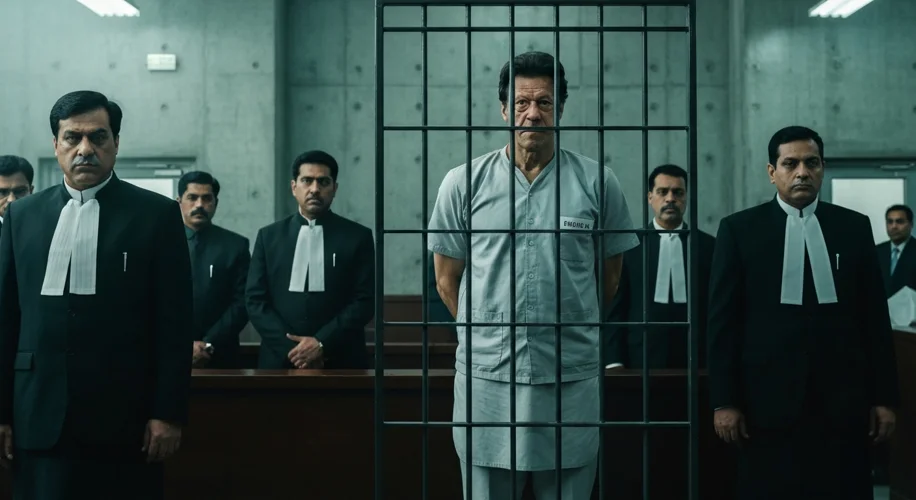
Imran Khan’s political journey is a compelling narrative of ambition, conviction, and the often-brutal realities of power. From the adulation of a cricket hero to the helm of a nuclear-armed nation, and now to the confines of a jail cell, his story is a potent reminder of the unpredictable currents of Pakistani politics. His legacy remains a subject of intense debate: a visionary reformer who dared to challenge the status quo, or a populist leader whose ambition ultimately led to his downfall. The echoes of his political odyssey continue to reverberate, shaping the ongoing discourse on justice, governance, and the future of Pakistan.