The year is 1400. The known world for most Europeans is a relatively small sphere, dominated by familiar lands and ancient traditions. The vast oceans that shimmered beyond the coastlines were mysterious, terrifying, and largely uncharted. But a seismic shift was brewing, a period of unprecedented curiosity and ambition that would forever alter the maps of the world and the course of human history: the Age of Discovery.
Imagine standing on the docks of Lisbon or Seville, the salty spray of the Atlantic on your face, the air thick with the scent of tar, spices, and a palpable sense of anticipation. For centuries, European trade with the East had been a tantalizing but perilous affair. Spices like pepper, cinnamon, and cloves, highly prized for preserving food and adding flavor to bland diets, traveled arduous routes across continents and through the hands of numerous intermediaries, making them astronomically expensive and often subject to disruption. The allure of reaching these fabled lands directly, bypassing the established overland routes controlled by various empires, became an irresistible siren song.
But the desire for wealth wasn’t the sole propellant. Religious fervor played a significant role. The Catholic Church, having recently pushed back the Moors from the Iberian Peninsula, harbored a desire to spread Christianity to new lands and peoples, to ‘save souls’ in territories yet untouched by the Gospel. This missionary zeal, often intertwined with the pursuit of earthly riches, provided a powerful moral justification for venturing into the unknown.
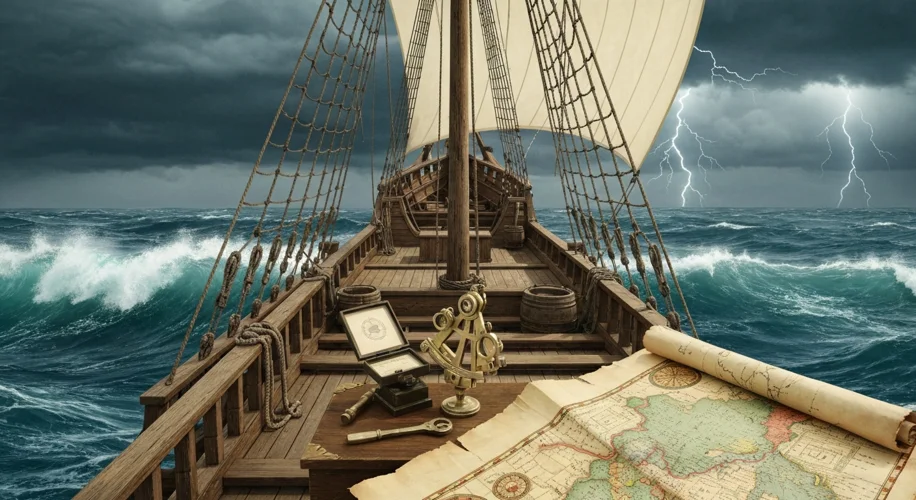
Technological advancements acted as the crucial enablers. The development of the caravel, a sturdy and maneuverable ship capable of sailing against the wind, was a game-changer. Coupled with improvements in navigation, such as the astrolabe and the quadrant for celestial navigation, and a better understanding of wind patterns and ocean currents, these innovations provided mariners with the confidence to venture further from familiar shores. The printing press, though in its nascent stages, also played a part, disseminating new maps and accounts of voyages, fueling further exploration.
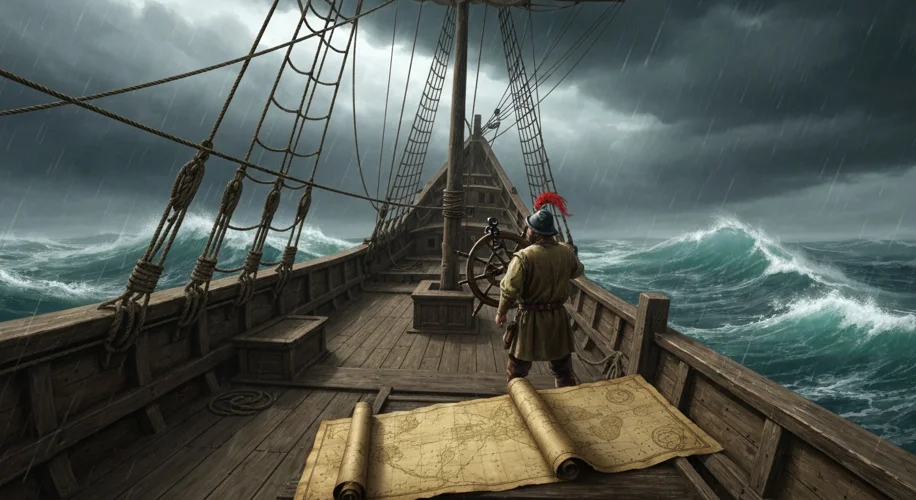
Figures like Prince Henry the Navigator of Portugal, though he himself rarely sailed, sponsored numerous expeditions down the African coast starting in the early 15th century. His vision was to find a sea route to the riches of India and the East, and to outflank the Ottoman Empire’s control over Mediterranean trade. The Portuguese, under explorers like Bartolomeu Dias, who famously rounded the Cape of Good Hope in 1488, and Vasco da Gama, who finally reached India by sea in 1498, were pioneers. Their success opened up new trade routes and established a Portuguese maritime empire.
Then came a name that would echo through history: Christopher Columbus. Sailing under the Spanish flag in 1492, driven by a belief that the Earth was smaller than widely accepted and that a westward voyage would reach the East Indies, Columbus’s four voyages would inadvertently lead him to the Americas. While he died believing he had reached Asia, his journeys marked the beginning of sustained European contact with a hemisphere previously unknown to them.
This encounter was not a polite introduction. The arrival of Europeans in the Americas, soon followed by figures like Hernán Cortés and Francisco Pizarro, led to conquest, the devastating spread of European diseases to which indigenous populations had no immunity, and the tragic establishment of the transatlantic slave trade. The wealth extracted from the Americas—gold, silver, and later, agricultural products—fueled the economies of Europe, but at an immense human cost.
The impact of the Age of Discovery was profound and multifaceted. It led to the creation of global trade networks, the Columbian Exchange (the widespread transfer of plants, animals, culture, human populations, technology, diseases, and ideas between the Americas, West Africa, and the Old World), and the rise of European colonial powers. The world, once seemingly vast and disconnected, began to shrink, interconnected by ships and new ideas, albeit often through subjugation.
It’s crucial to remember that ‘discovery’ is a European-centric term. For the vibrant civilizations already thriving in the Americas, Africa, and Asia, this was an invasion and a period of profound disruption. The Age of Discovery, while a testament to human curiosity and technological prowess, also ushered in an era of exploitation, cultural destruction, and profound inequality that continues to shape our world today. The echoes of these voyages, both the triumphs of exploration and the tragedies of conquest, reverberate even now, reminding us of the complex and often brutal forces that have shaped our globalized present.