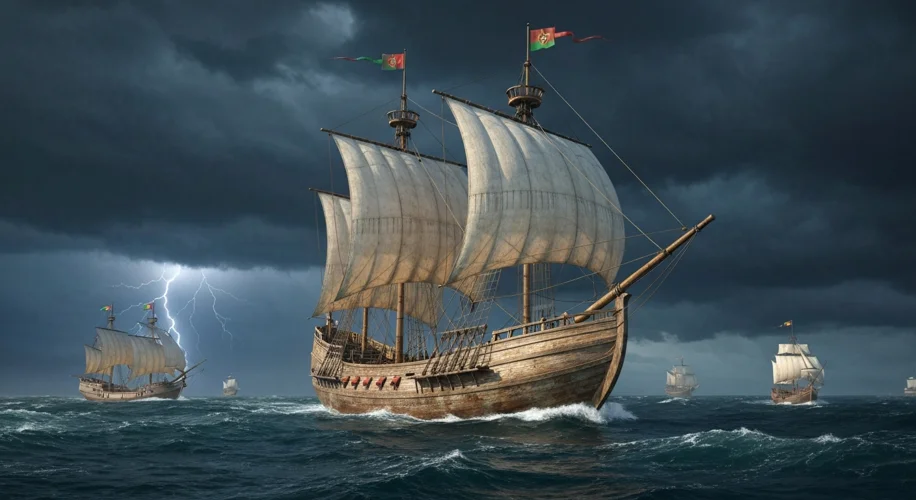
The year is 1498. The salty spray of the Atlantic lashes against the weathered timbers of the caravels. On board, a determined band of Portuguese sailors, their faces etched by sun and sea, stare at the horizon. They are on the cusp of a discovery that will forever alter the course of history – a sea route to India, a prize long sought after, a testament to Portugal’s burgeoning maritime might.
For centuries, the allure of the East – its spices, silks, and exotic treasures – had captivated European imaginations. But the treacherous overland routes were fraught with peril and controlled by intermediaries. Portugal, a nation blessed with a long coastline and a spirit of relentless curiosity, saw a different path. Under the visionary patronage of Prince Henry the Navigator, Portuguese explorers began to inch their way down the coast of Africa. It was a slow, painstaking process, fraught with danger. They battled fierce currents, navigated unknown waters, and faced the specter of scurvy, a dreaded disease that claimed countless lives.
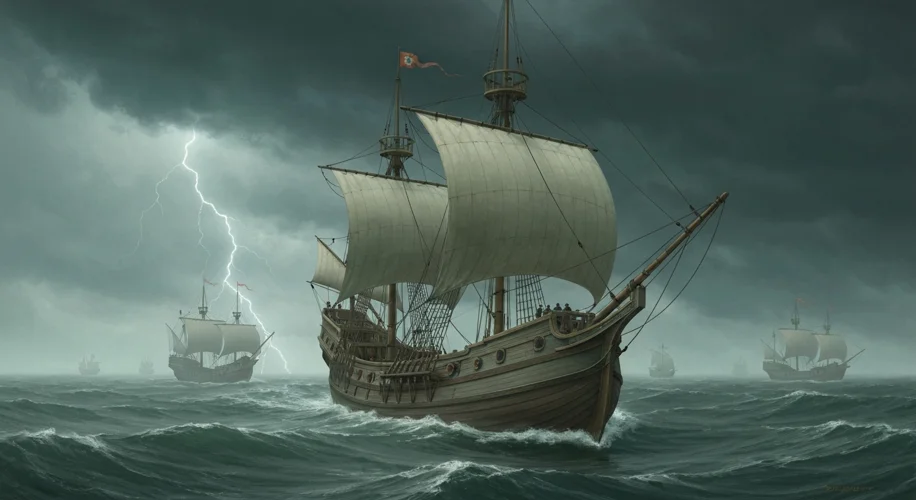
These were not mere adventurers; they were pioneers armed with new navigational tools like the astrolabe and the quadrant, and with ships – the nimble caravels – designed for long-distance voyages. Each landfall was a victory, each charted bay a step closer to their ultimate goal. By the mid-15th century, they had rounded the Cape of Good Hope, a monumental achievement that opened the door to the Indian Ocean. The whispers of this success reached across Europe, igniting a fire of ambition in other seafaring nations, most notably Spain.
The rivalry between Portugal and Spain was as palpable as the sea breeze. Both nations, fueled by a potent mix of religious zeal, economic ambition, and national pride, were locked in a fierce competition to claim the riches of the newly discovered lands. The voyages of Christopher Columbus, sailing under the Spanish flag in 1492, had landed him in the Americas, a continent previously unknown to Europeans. This ‘discovery’ – though it was already inhabited – sent shockwaves through the courts of Europe.
The question arose: who owned these new territories? Who had the right to claim them and exploit their resources? The tension between Portugal and Spain, two Iberian powers suddenly thrust onto the global stage, reached a fever pitch. Their competing claims threatened to spill over into open conflict.
It was Pope Alexander VI, a Spaniard himself, who attempted to mediate this burgeoning dispute. In 1494, he issued the papal bull Inter Caetera, which drew a line of demarcation across the Atlantic Ocean. Lands to the west of this line were to belong to Spain, and lands to the east, to Portugal. However, this line proved to be a source of contention, particularly for Portugal, which felt it unfairly limited its claims in the Atlantic, especially concerning the eastward-jutting bulge of South America.
Negotiations ensued, conducted with the same meticulousness and strategic maneuvering that characterized their naval expeditions. The result was the Treaty of Tordesillas, signed in 1494. This treaty redefined the line of demarcation, moving it further west. This seemingly subtle shift had profound consequences. It effectively granted Portugal the rights to what would become Brazil, a territory that might otherwise have fallen under Spanish dominion.
The Treaty of Tordesillas was more than just a line on a map; it was a pragmatic compromise born from rivalry and ambition. It laid the groundwork for the vast Portuguese empire in Brazil and solidified its dominance over the sea routes to Asia. It also, however, set a precedent for European powers to carve up the world amongst themselves, often disregarding the rights and sovereignty of indigenous populations already living in these lands.
Portugal’s era of exploration was a period of unparalleled daring and innovation. From the perilous waters around Africa to the spice-laden coasts of India and the burgeoning lands of Brazil, their ships carried not just goods but also ideas, cultures, and the seeds of global empires. The echoes of their voyages continue to resonate, shaping the political, cultural, and economic landscapes of the world we inhabit today.