The year is 1492. The air crackles with a blend of trepidation and fervent hope. For centuries, the vast Atlantic Ocean had been a formidable barrier, a shimmering, endless expanse that whispered tales of monsters and madness. Yet, in the bustling port of Palos, Spain, a Genoese mariner named Christopher Columbus gazed westwards, his eyes not reflecting fear, but a burning conviction.
Columbus was not the first to dream of reaching the East by sailing west. The idea, though audacious, was not entirely new. Scholars and navigators had pondered the Earth’s spherical nature for centuries. However, it was Columbus who possessed the relentless drive, the unshakeable faith, and the persuasive cunning to turn this theoretical possibility into a tangible quest. He envisioned a direct sea route to the riches of Asia – the spices, silks, and gold that tantalized European markets. But the journey was fraught with peril, and the established powers of the time were hesitant.
For years, Columbus pleaded his case before the monarchs of Europe, seeking the patronage he desperately needed. Portugal, a nation already making strides in maritime exploration, initially rejected his proposals. The sheer distance he proposed to cover was staggering, and the navigational tools of the era, while improving, were hardly precise enough for such a monumental undertaking. The prevailing wisdom suggested a long, arduous route around Africa. Yet, Columbus persisted, his arguments fueled by a potent mix of biblical prophecy, geographical calculations (some of them, as history would reveal, quite flawed), and an unyielding belief in divine providence.
Finally, after years of rejection and negotiation, King Ferdinand and Queen Isabella of Spain, fresh from their victory in the Reconquista, saw the potential. In an era where national prestige and economic power were intrinsically linked, the prospect of outmaneuvering rivals and securing direct access to Eastern trade routes was too enticing to ignore. In April 1492, the ambitious Isabella, with a royal decree and the promise of governorship over any lands discovered, finally granted Columbus his commission.
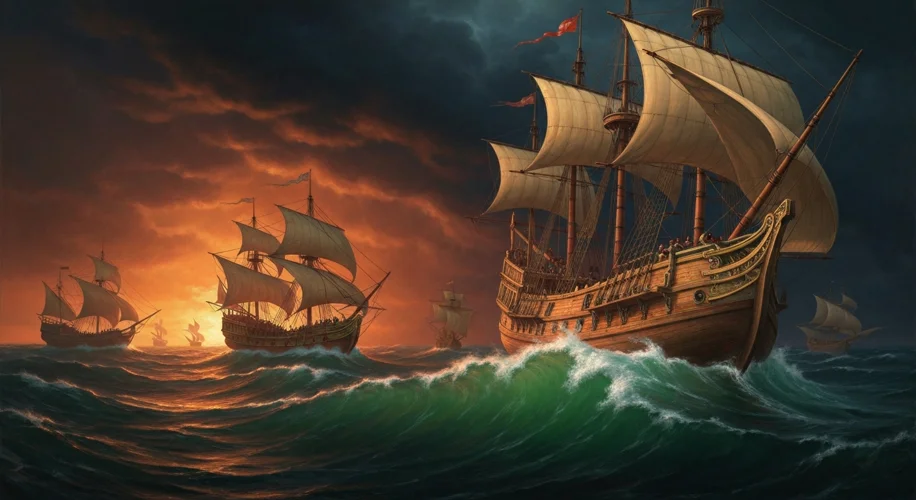
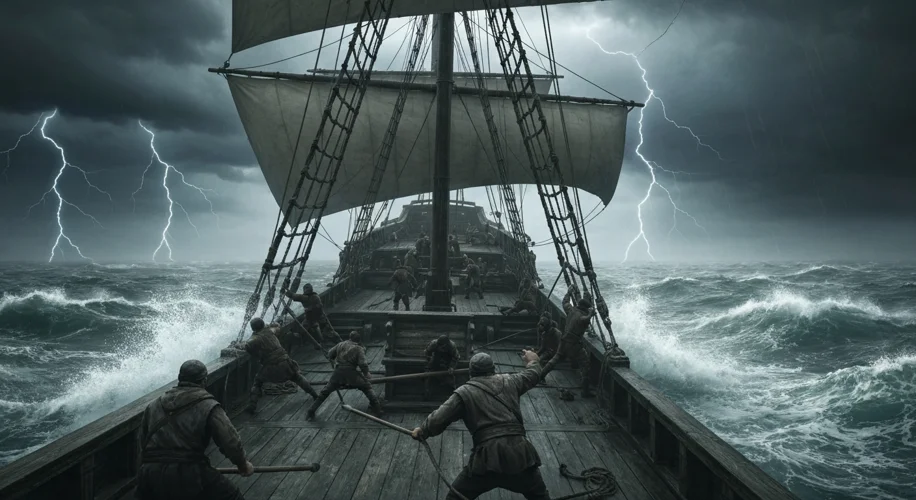
On August 3, 1492, the Santa Maria, the Pinta, and the Niña, three small but sturdy caravels, set sail from Palos. The mood onboard was a tempest of emotions: the grim determination of the seasoned sailors, the hopeful ambition of the officers, and the quiet resolve of Columbus himself. The first few weeks were filled with the familiar rhythm of sea life, but as days turned into weeks, and weeks into months, the vastness of the ocean began to weigh heavily on the crew. Supplies dwindled, whispers of mutiny grew louder, and the familiar sight of land became a distant memory.
Legend has it that it was a sailor named Rodrigo de Triana, aboard the Pinta, who first sighted land on October 12, 1492. The cry echoed across the waves, a wave of relief and exhilaration washing over the exhausted sailors. They had not found the shores of Cipango (Japan) or Cathay (China) as Columbus had hoped, but a lush, verdant island in the Bahamas, which Columbus, in his fervent belief, named San Salvador.
This was not the empty continent many might imagine. The islands were inhabited by indigenous peoples, the Taíno, who met the newcomers with a mixture of curiosity and caution. Columbus, however, saw them not as fellow human beings with their own rich cultures and histories, but as potential subjects and sources of wealth. He described them in his journal as “very fair and of handsome forms, very gentle, and of a very clear voice.” Yet, his actions soon belied this initial description. He immediately began searching for gold and, more ominously, started to contemplate the enslavement and exploitation of the native population.
Columbus’s subsequent voyages, three more in total, continued this pattern. He explored more islands in the Caribbean, including Cuba and Hispaniola, and even touched the mainland of South America. He brought back tales and treasures, but also diseases that would devastate indigenous populations and initiated a brutal transatlantic slave trade. From a European perspective, he had ‘discovered’ a ‘New World,’ a phrase that in itself erased the existence of millions who already called it home.
The impact of Columbus’s voyages was profound and irreversible. It marked the beginning of sustained European contact with the Americas, a period that would dramatically reshape the global landscape. The Spanish monarchy, emboldened by Columbus’s findings, quickly moved to claim vast territories, leading to centuries of colonization, exploitation, and the profound cultural exchange – often violent – between Europe, Africa, and the Americas. This encounter, known as the Columbian Exchange, brought new plants, animals, and diseases to both hemispheres, forever altering ecosystems and societies.
Today, Christopher Columbus is a figure of immense historical debate. For some, he remains a heroic explorer who bravely ventured into the unknown, a symbol of human courage and discovery. For others, he is a harbinger of conquest, exploitation, and genocide, whose actions led to the subjugation and suffering of indigenous peoples. His legacy is a complex tapestry, woven with threads of ambition, bravery, brutality, and an insatiable hunger for wealth and power. The ships that sailed west in 1492 did more than just cross an ocean; they irrevocably altered the course of human history, setting in motion a chain of events whose echoes continue to resonate in the world we inhabit today.