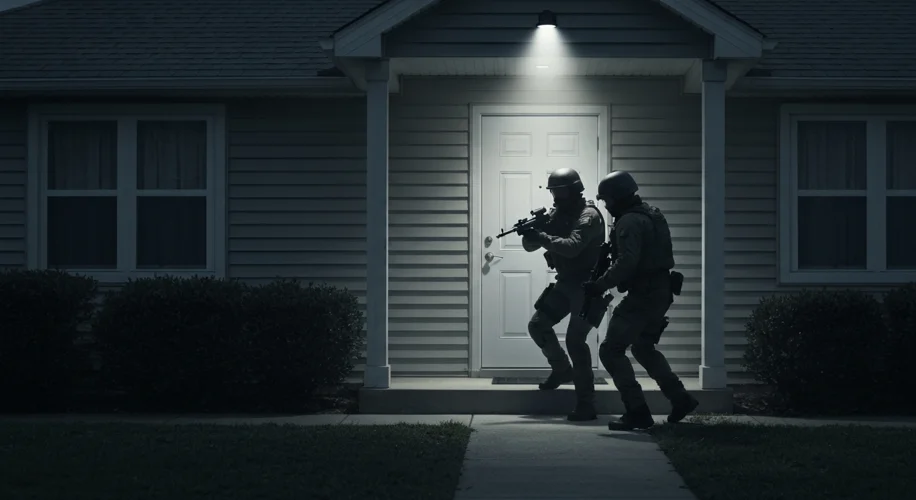
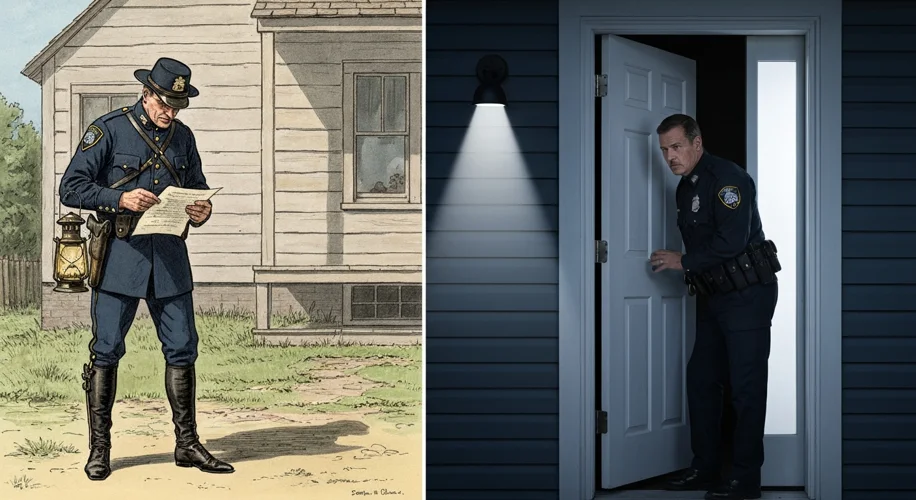
The sanctity of the home, a hallowed space of privacy and refuge, stands as a cornerstone of liberty. Yet, the power of the state, embodied by law enforcement, to breach this sanctuary without consent or judicial warrant has been a persistent point of tension throughout American history. This struggle is deeply interwoven with the Fourth Amendment, a bulwark against unreasonable searches and seizures, and its interpretation has evolved dramatically alongside policing practices and societal understanding of individual rights.
From the nascent days of the American republic, the concept of a private dwelling was fiercely protected. Early colonial laws and the burgeoning legal framework inherited from England emphasized the home as a castle, inviolable except under specific, dire circumstances. This deeply ingrained sentiment found its voice in the Fourth Amendment, ratified in 1791, which states: “The right of the people to be secure in their persons, houses, papers, and effects, against unreasonable searches and seizures, shall not be violated, and no Warrants shall issue, but upon probable cause, supported by Oath or affirmation, and particularly describing the place to be searched, and the persons or things to be seized.”
However, the ink on the Constitution was barely dry before the practicalities of law enforcement began to test its limits. In the 19th century, as cities grew and new forms of crime emerged, police forces, often rudimentary and understaffed, grappled with how to enforce laws effectively. The idea of a warrant, a formal judicial order, was central, but the reality on the ground was often more fluid. During times of social unrest, or when pursuing suspected felons, officers might act with greater urgency, sometimes entering homes on the basis of less than definitive proof.

A pivotal shift began to occur in the late 19th and early 20th centuries, fueled by burgeoning urban policing and a changing legal landscape. The Supreme Court, in cases like Weeks v. United States (1914), began to establish the exclusionary rule, which prohibited the use of illegally obtained evidence in federal courts. This was a significant step in reinforcing the Fourth Amendment’s protections.
But the tension between security and liberty remained. The mid-20th century saw a surge in crime and a corresponding emphasis on law and order. This era witnessed a critical Supreme Court case, Mapp v. Ohio (1961), which extended the exclusionary rule to state courts. The Court declared that evidence obtained in violation of the Fourth Amendment was inadmissible in all state criminal trials. This was a landmark victory for civil liberties, seemingly solidifying the warrant requirement as the primary gateway to a person’s home.
However, the legal landscape is rarely static. Over the decades, exceptions to the warrant requirement have been carved out, often justified by exigency or societal need. The concept of “exigent circumstances” emerged, allowing officers to enter a home without a warrant if they have probable cause to believe that evidence will be destroyed, a suspect will escape, or someone inside is in danger. This includes situations like hot pursuit of a fleeing suspect, or responding to a credible report of a violent crime in progress.
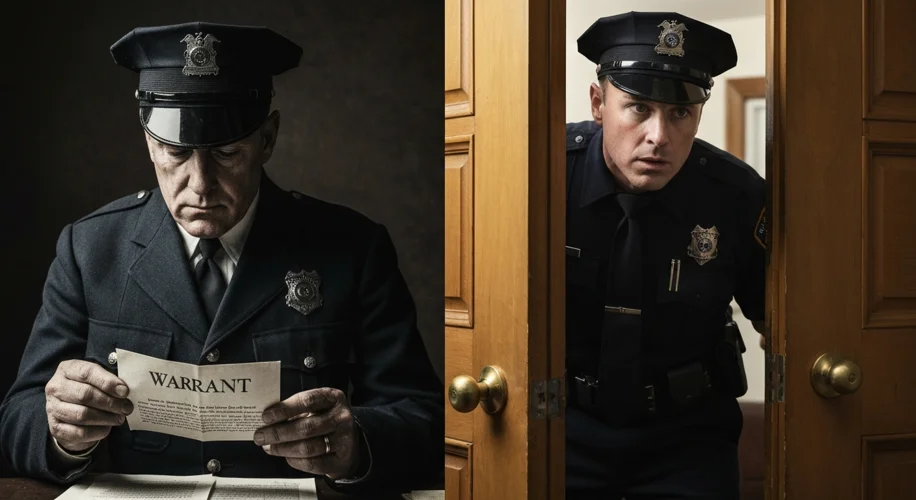
Another significant development has been the evolution of administrative and special needs searches. While not directly pertaining to criminal investigations, these exceptions allow for warrantless entries in specific contexts, such as parolee searches (where parolees are deemed to have a reduced expectation of privacy), or searches related to public safety or regulatory compliance. These areas remain controversial, raising questions about the erosion of privacy protections.
The 21st century has brought new complexities. The rise of digital surveillance and the ongoing debate surrounding national security have further blurred the lines. The ability to collect vast amounts of data, and the legal battles over accessing it, have become central to the discussion of privacy and home entry. Furthermore, the increased militarization of police forces has led to more frequent and often more forceful entries into homes, sometimes under controversial circumstances, sparking protests and renewed calls for accountability and reform.
The history of home entry powers for law enforcement in the United States is a continuous narrative of negotiation between the imperative of public safety and the fundamental right to privacy. Each legal interpretation, each policy shift, and each societal demand leaves its mark. As technology advances and societal challenges evolve, the debate over the sanctity of the home and the boundaries of law enforcement power will undoubtedly continue to unfold, echoing the persistent struggle for balance that has defined this nation’s journey.