

In the vast expanse of the Southern Hemisphere, where turquoise waters kiss rugged coastlines and ancient forests whisper tales of the land, flies a flag that tells a story of history, identity, and a bond that has endured through time. It is the flag of New Zealand, a banner that, for many, remains inextricably linked to the Union Jack.
To understand the New Zealand flag, we must journey back to a time when the British Empire cast a long shadow across the globe, a time of exploration, settlement, and the intricate weaving of cultures. For New Zealand, or Aotearoa as it is known by its indigenous Māori people, this era began in earnest in the 19th century. The arrival of European settlers, most notably under the Treaty of Waitangi in 1840, marked a pivotal moment, initiating a complex and often fraught relationship between Māori and the Crown.
In those early colonial days, the Union Jack was the undeniable symbol of British authority and presence. It was raised over newly claimed territories, a visible testament to imperial power. As New Zealand began to forge its own identity, distinct from but deeply connected to Britain, the need for a national flag arose. The early contenders were varied, some reflecting local flora and fauna, others a more overt embrace of British heritage.
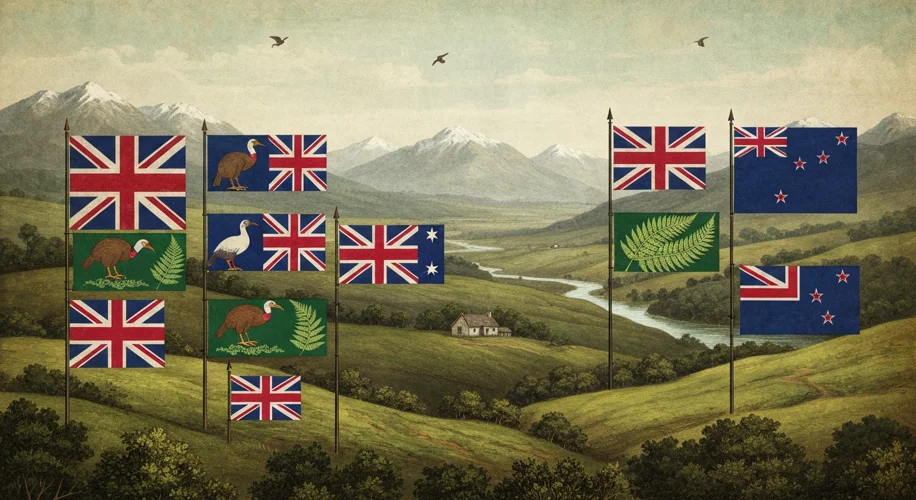
The story of New Zealand’s current flag truly begins in the mid-19th century. Various flags were used in the colonial period, often incorporating the Union Jack alongside local symbols. However, it was the design that eventually became the national flag that gradually gained prominence. Its genesis lies in the desire to create a symbol that represented both New Zealand’s burgeoning identity and its continued allegiance to the British Crown.
By the 1860s, a flag featuring the Union Jack in the canton (the upper hoist corner) and four red stars, representing the constellation of the Southern Cross, began to appear. The Southern Cross, a prominent feature of the Southern Hemisphere’s night sky, provided a distinctively New Zealand element. These stars, initially appearing in varying arrangements and colors, were eventually standardized to four red, five-pointed stars with white borders, arranged as they appear in the constellation.
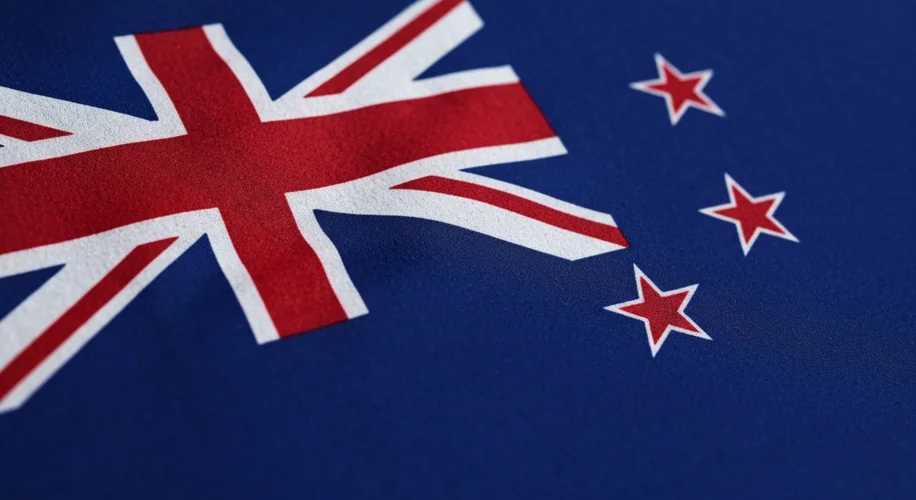
This design, often referred to as the Blue Ensign, was officially adopted as New Zealand’s national flag in 1902. The Blue Ensign itself was a British maritime ensign, historically flown by merchant ships of the British Empire. Its adoption for New Zealand was a deliberate choice, signifying a shared heritage and a continued connection with the United Kingdom. The inclusion of the Union Jack was not merely an oversight; it was a conscious decision that reflected the prevailing political and cultural climate. For many New Zealanders, Britain was the mother country, the source of law, governance, and a shared cultural identity.
The Union Jack in the New Zealand flag speaks volumes about this historical relationship. It is a visual reminder of New Zealand’s colonial past, its participation in imperial wars, and the enduring cultural ties that bind the two nations. It signifies a voluntary association, a commonwealth of nations that, while independent, acknowledged a shared history and a common head of state.
However, this symbolic inclusion has not been without its debates. Over the decades, particularly in recent times, discussions have emerged about the appropriateness of retaining the Union Jack. Some argue that New Zealand’s identity has evolved significantly, and the flag should more fully reflect its unique Pacific nationhood, independent of its colonial past. These calls for change often highlight the desire for a flag that is entirely distinct and representative of a modern, multicultural New Zealand.
Yet, for many, the flag, with its Union Jack, continues to hold deep meaning. It represents not just a historical connection but also the shared values and democratic traditions that stemmed from that connection. It speaks to the experience of New Zealanders who fought alongside British forces in world wars, the shared language and legal systems, and the cultural exchanges that have shaped the nation. It is a symbol of a relationship that, while evolving, remains significant.
The ongoing debate about the New Zealand flag is a microcosm of how nations grapple with their history and identity. It highlights the tension between acknowledging the past, with all its complexities, and embracing the future. The Union Jack on the New Zealand flag is more than just a piece of fabric; it’s a historical artifact, a conversation starter, and a testament to the enduring, evolving relationship between New Zealand and Britain.