
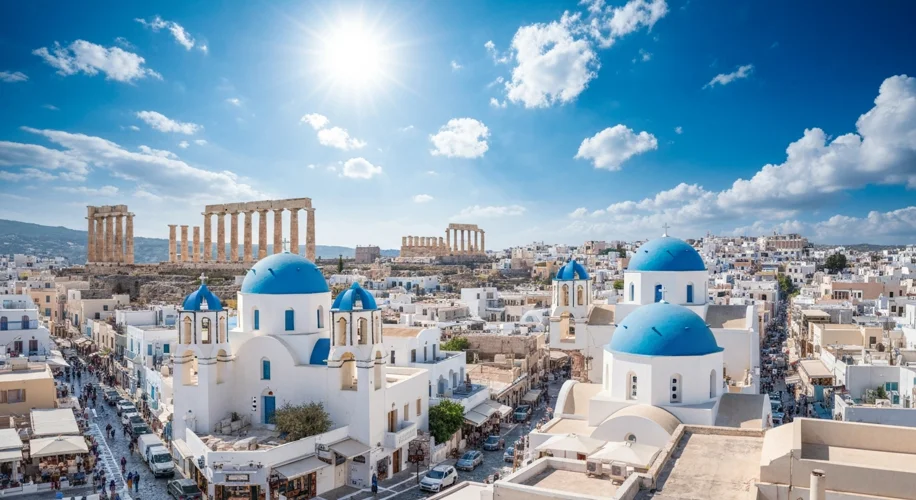
The year is 1950. Greece, a land steeped in ancient history and vibrant culture, stood ravaged. World War II and the subsequent civil war had left its cities in ruins, its infrastructure shattered, and its people weary. Yet, within a few decades, this battered nation would embark on a remarkable journey of recovery and prosperity, a period that historians would come to call the “Greek Economic Miracle.”
Imagine the scene: dusty roads where once paved avenues lay, homes reduced to rubble, and the pervasive scent of despair hanging heavy in the air. This was the Greece that emerged from the crucible of conflict. The war had not only decimated its physical landscape but had also fractured its social fabric. The civil war, in particular, which pitted communist and nationalist forces against each other, left deep scars and widespread devastation.
But within the resilience of the Greek spirit, a new chapter was waiting to be written. The post-war era brought with it a critical juncture. For Greece, this meant navigating a complex geopolitical landscape, a delicate dance between East and West, while simultaneously grappling with the monumental task of rebuilding.
The 1950s and 1960s became the crucial decades. A combination of factors fueled this transformation. Foremost among them was external aid. The United States, through the Marshall Plan, provided substantial financial assistance, injecting much-needed capital into the Greek economy. This wasn’t just about rebuilding roads and bridges; it was about revitalizing industries, supporting agriculture, and laying the groundwork for future growth.
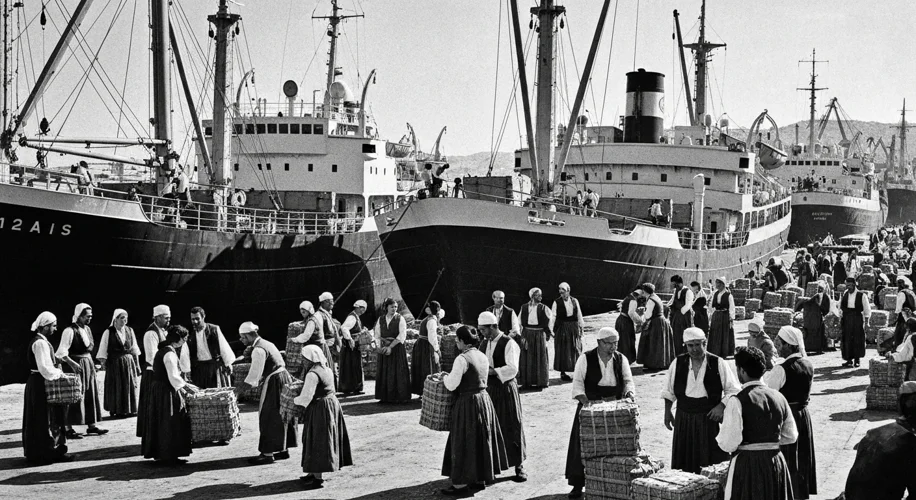
Simultaneously, Greece began to tap into its inherent strengths. Tourism, a sector that would become a cornerstone of its modern economy, started to flourish. The allure of ancient ruins, sun-drenched islands, and the Mediterranean lifestyle drew visitors back, eager to experience the magic of Greece. This influx of foreign currency provided a vital boost.
Industrialization also played a significant role. While not reaching the scale of some Northern European counterparts, Greece saw a rise in manufacturing, particularly in sectors like textiles, cement, and food processing. This diversification helped to reduce the nation’s reliance on agriculture, which had long been its primary economic driver.
Key to this economic resurgence were visionary leaders and a workforce eager to rebuild. Figures like Prime Minister Konstantinos Karamanlis championed modernization and European integration, laying the political groundwork for Greece’s eventual accession to the European Economic Community (EEC) in 1981. His policies emphasized infrastructure development, attracting foreign investment, and fostering a sense of national unity.
The human element cannot be overstated. Greek workers, often enduring long hours and challenging conditions, poured their energy into reconstruction. They were the hands that rebuilt factories, the minds that innovated in burgeoning industries, and the welcoming smiles that greeted tourists.
The impact of this period was profound. Between the late 1950s and the early 1970s, Greece experienced sustained, high rates of economic growth, often exceeding 7% annually. Unemployment, a persistent specter of the post-war years, significantly decreased. Living standards improved dramatically, with greater access to education, healthcare, and consumer goods.
Cities like Athens transformed from post-war devastation into vibrant metropolises. The islands, once remote outposts, became international destinations. The visual contrast between the Greece of 1950 and the Greece of 1970 was striking – a testament to the collective effort and strategic planning.
However, like any period of rapid transformation, the “miracle” wasn’t without its complexities. Critics point to issues of income inequality, the rise of clientelism in politics, and an over-reliance on certain sectors like tourism, which could be vulnerable to external shocks.
But even with these caveats, the Greek Economic Miracle remains a compelling story of national resilience and rebirth. It demonstrates how a nation, seemingly broken by war, can harness its strengths, leverage international cooperation, and embark on a path to significant economic recovery and improved quality of life for its citizens. It’s a period that continues to inspire, reminding us of the enduring power of human endeavor in the face of adversity.