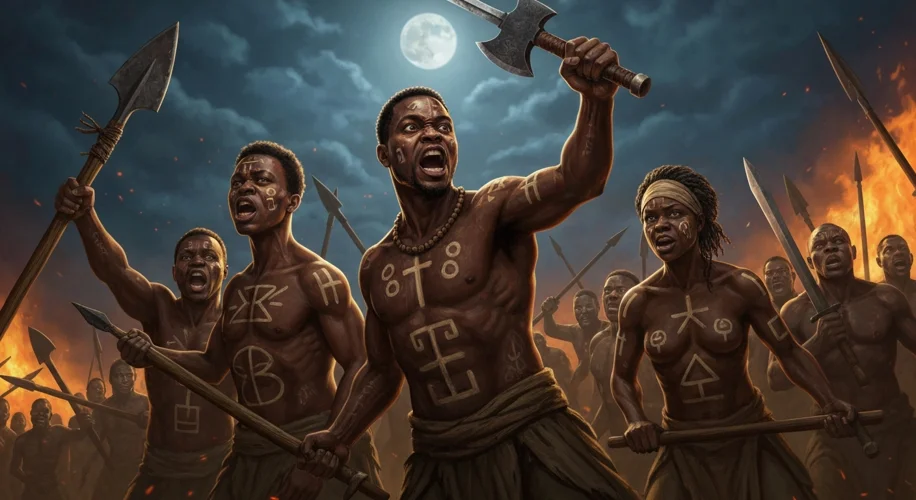
In the annals of history, few events echo with the resounding power of the Haitian Revolution. It stands as a singular beacon: the only successful slave revolt in history that birthed a free nation. This seismic upheaval, unfolding in the tumultuous years from 1791 to 1804, didn’t just liberate a people; it sent shockwaves across the Atlantic world, challenging the very foundations of slavery and igniting the embers of hope for the oppressed everywhere.
A Crucible of Brutality and Resistance
To understand the revolution, one must first grasp the infernal conditions of Saint-Domingue, the French colony that would become Haiti. By the late 18th century, it was the wealthiest colony in the Americas, its prosperity built on the backs of an enslaved African population numbering close to 500,000. These individuals were subjected to unimaginable brutality, toiling under a relentless sun in sugar plantations, their lives cheap commodities in a system driven by insatiable European demand for luxury goods.
The culture of Saint-Domingue was a volatile mix of French colonial arrogance, African traditions brought by the enslaved, and a growing sense of mulatto (mixed-race) identity. The enslaved population, forcibly ripped from their diverse African homelands, developed a syncretic culture, blending elements of West African religions like Vodou with Catholicism. This vibrant, resilient culture became a bedrock of their shared identity and a source of strength in their darkest hours.
The Winds of Change Blow Through the Caribbean
The late 18th century was a period of profound global change. The Enlightenment’s ideals of liberty and equality, though often hypocritically applied by European powers, had trickled down, inspiring whispers of freedom. The French Revolution, beginning in 1789, with its cry of “Liberté, égalité, fraternité,” sent a particularly potent message across the Atlantic. In France itself, the ideals were debated and reinterpreted, creating a chaotic environment where colonial structures began to fray.
Within Saint-Domingue, these winds of change found fertile ground. The enslaved population, enduring unspeakable suffering, saw an opportunity. The free people of color, though not enslaved, faced severe legal and social discrimination, fueling their own desire for equal rights. And the French colonists, fractured by political divisions and grappling with events back home, found their grip on power weakening.
The Spark Ignites: From Whispers to War
The revolution didn’t erupt overnight. It began with simmering discontent, acts of sabotage, and organized resistance. The pivotal moment arrived on the night of August 21, 1791. In the northern plains, a Vodou ceremony at Bois Caïman (Alligator Creek) is said to have served as the catalyst, a sacred pact to rise up against their oppressors. From this point, the rebellion spread like wildfire.
Leading this charge were figures of extraordinary courage and military genius. Toussaint Louverture, a former slave, rose to become the revolution’s most brilliant strategist and statesman. He was a master of diplomacy and warfare, navigating the complex alliances and betrayals of French, Spanish, and British forces that vied for control of the island. His leadership was instrumental in organizing the disparate rebel bands into a formidable army.
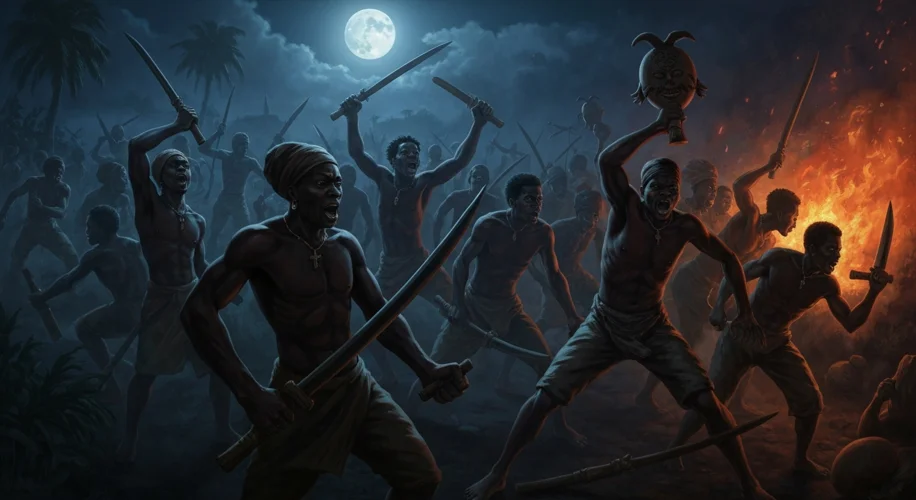
Other key figures included Jean-Jacques Dessalines, a fierce and uncompromising military leader, and Henri Christophe, who would later play a significant role in Haiti’s post-revolution development.
Their struggle was not merely for freedom from chains, but for the very recognition of their humanity. They faced not only the brutal might of the French colonial army but also the deeply entrenched racism of the era, which deemed them incapable of self-governance.
A Nation Forged in Blood and Fire
The revolution was a long and bloody affair. France, under Napoleon Bonaparte, attempted to reassert control and reinstate slavery, sending a massive expeditionary force in 1802. Toussaint Louverture was captured and deported to France, where he died in prison. However, his death only fueled the resolve of his followers.
Under Dessalines, the Haitian army, bolstered by yellow fever that decimated the French forces, fought with renewed ferocity. On January 1, 1804, Dessalines declared the independence of Saint-Domingue, renaming it Haiti – a Taino word meaning “land of high mountains.” This act was a direct defiance of every major power in the Atlantic world, a testament to the indomitable will of a people who had tasted freedom and would not be re-enslaved.
Echoes Across the Atlantic and Beyond
The consequences of the Haitian Revolution were profound and far-reaching.
- The End of Slavery in Haiti: The most immediate impact was the establishment of the world’s first free black republic, a sanctuary for enslaved people and a symbol of hope for millions more.
- Fear and Repression in Slave Societies: For slaveholders in the United States, the Caribbean, and South America, the revolution instilled a deep fear of similar uprisings. This led to increased repression and harsher slave codes in many regions.
- Inspiration for Future Revolts: Conversely, the Haitian Revolution served as a powerful inspiration for abolitionist movements and future slave rebellions across the Americas.
- Economic and Political Repercussions: Haiti faced immense economic hardship, burdened by a crippling debt imposed by France as a condition for recognition and ostracized by a world dominated by slave-holding powers. This isolation profoundly shaped its future.
- The Louisiana Purchase: Napoleon’s failure in Haiti contributed to his decision to sell the vast Louisiana Territory to the United States in 1803, doubling the size of the young nation and fundamentally altering the course of North American history.
A Legacy of Defiance
The Haitian Revolution was more than just a military victory; it was a radical reimagining of the world. It demonstrated that enslaved people could not only fight for their freedom but also establish and govern themselves. It shattered the myth of white supremacy and the inherent right of European powers to colonize and exploit.
While Haiti’s journey has been fraught with challenges, its revolution remains a monumental achievement. It is a testament to the enduring power of the human spirit, a story that continues to remind us that the struggle for liberty and self-determination can, against all odds, triumph. The echoes of those who broke their chains in Saint-Domingue resonate through the ages, a powerful reminder of the price of freedom and the unyielding quest for human dignity.