
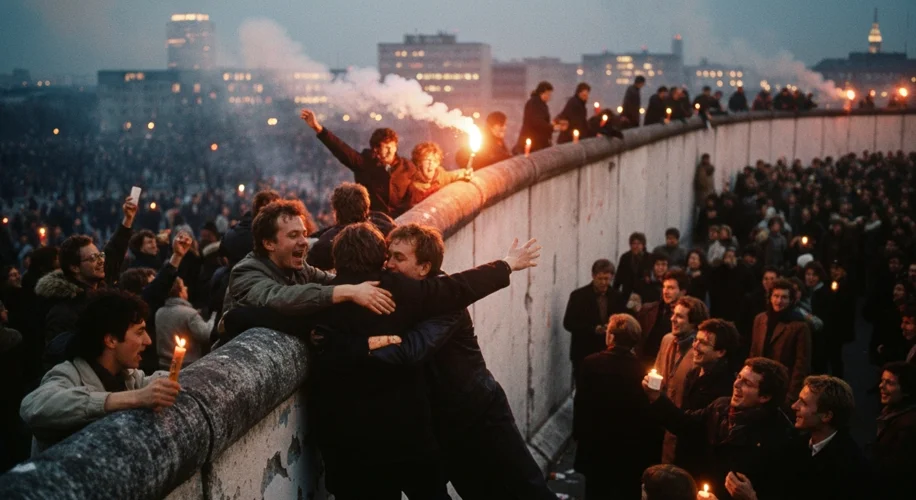
The air in East Berlin on November 9th, 1989, crackled with an energy rarely felt before. It was a crisp autumn evening, but the chill in the air was no match for the simmering tension, the years of quiet desperation, and the dawning realization that something monumental was about to happen. For nearly three decades, the Berlin Wall had stood not just as a physical barrier of concrete and barbed wire, but as a stark, brutal symbol of a divided world – the Iron Curtain that cleaved Europe in two, separating families, ideologies, and futures.
For West Berliners, the Wall was a constant, grim reminder of their city’s division, a scar on their urban landscape. For East Berliners, it was a cage. The German Democratic Republic (GDR), a Soviet-backed state, had erected the wall in 1961, ostensibly to keep “fascist elements” out, but in reality, to staunch the flow of its own citizens seeking freedom and opportunity in the West. The Wall became synonymous with oppression, with tragic escape attempts, and with the chilling efficiency of border guards tasked with preventing any unauthorized crossings. Families were torn apart overnight, lovers separated, and a palpable sense of confinement permeated life east of the Wall.
By the late 1980s, however, the winds of change were beginning to blow across Eastern Europe. Mikhail Gorbachev’s policies of Glasnost (openness) and Perestroika (restructuring) in the Soviet Union were creating ripples, encouraging dissent and reform movements in satellite states. Hungary had already opened its border with Austria, creating a loophole for East Germans to flee to the West. Protests within the GDR were growing, demanding freedom of travel and democratic reforms. The Monday Demonstrations in Leipzig, fueled by thousands of ordinary citizens, had become a powerful symbol of popular discontent. The pressure was building, immense and inexorable.
The pivotal moment arrived, almost anticlimactically, during a press conference. Günter Schabowski, an East German politburo official, was tasked with announcing new, relaxed travel regulations. However, his understanding of the complex new rules was, to put it mildly, incomplete. When asked by a journalist, Riccardo Ehrman of the Italian news agency ANSA, when these regulations would take effect, Schabowski, flustered and unprepared, stammered, “As far as I know, it takes effect immediately, without delay.” The words hung in the air, a spark in the tinderbox.
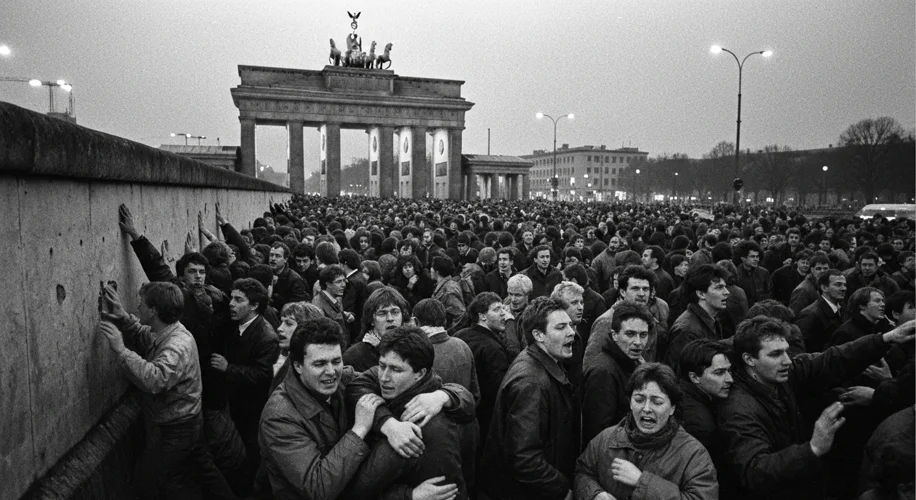
News spread like wildfire. East Berliners, hearing this on their radios and televisions, began to converge on the border crossings. At the Bornholmer Straße checkpoint, Harald Jäger, the commanding officer on duty, found himself facing an increasingly large and restless crowd. He had no clear orders, no instructions on how to handle this unprecedented situation. The pressure mounted – the crowd was chanting, pressing against the gates. The fear of a violent crackdown warred with the immense human desire for freedom.
Then, around 10:45 PM, faced with the growing threat of a stampede and the potential for bloodshed, Jäger made a decision that would echo through history. He ordered his guards to open the gates. The barrier that had divided a city and symbolized a global conflict for 28 years was, quite literally, breached. What followed was an outpouring of pure, unadulterated joy. East and West Berliners, strangers and friends, rushed into each other’s arms, tears streaming down their faces. People climbed atop the Wall, dancing, singing, chipping away at the concrete symbol of their division with whatever tools they could find.
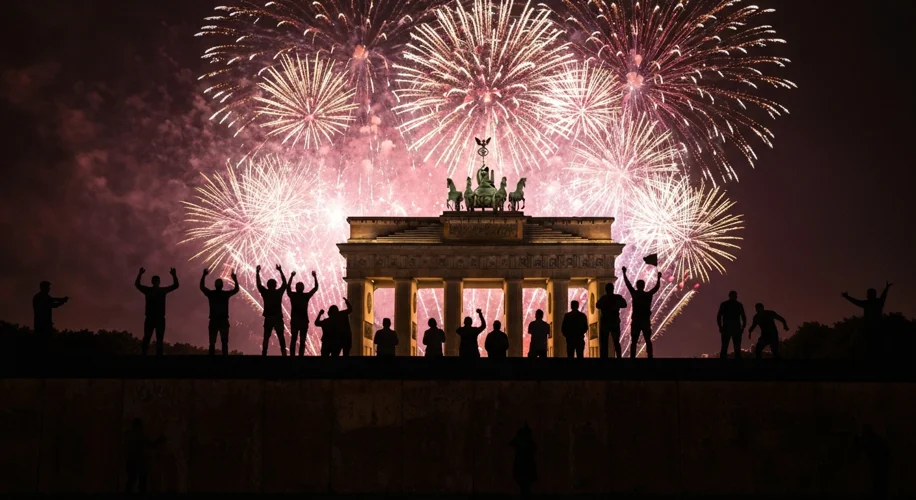
The fall of the Berlin Wall was not just a German event; it was a seismic shift in the global political landscape. It marked the symbolic end of the Cold War, the ideological and geopolitical struggle between the United States and the Soviet Union that had dominated international relations for over four decades. The dismantling of the Wall paved the way for the reunification of Germany, a process that was completed less than a year later, on October 3, 1990. It heralded a new era of European integration and fundamentally altered the balance of power in the world.
The consequences were far-reaching. The collapse of Soviet influence in Eastern Europe accelerated, leading to the dissolution of the Warsaw Pact and, ultimately, the Soviet Union itself in 1991. While the fall of the Wall was a moment of immense hope and celebration, it also ushered in a period of profound change and uncertainty. The transition to market economies in former Eastern Bloc countries was often turbulent, marked by economic hardship and social upheaval. The geopolitical map of Europe was redrawn, and new challenges and opportunities emerged on the global stage.
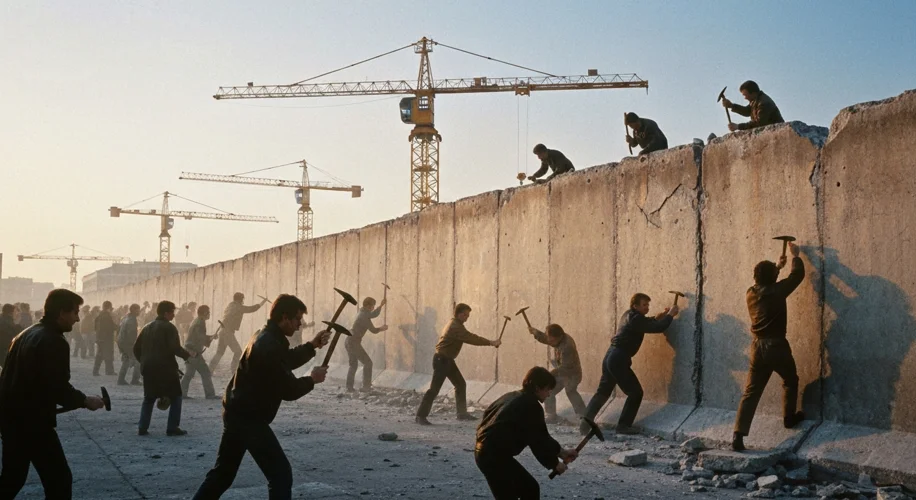
The fall of the Berlin Wall stands as a testament to the indomitable human spirit and the persistent desire for freedom. It reminds us that even the most formidable barriers can crumble when faced with the collective will of the people. It was a night when history pivoted, not through the machinations of generals or politicians alone, but through the courage and yearning of ordinary citizens who simply wanted to walk freely in their own city, their own country, and their own world.